
Service guide
Auto repair should begin with evidence, not a parts list
A useful repair process separates the reported symptom from the confirmed cause, documents findings, and verifies the result after work is complete.
Service directory
Start with the system or warning sign you recognize. Each service page explains what a professional diagnosis should establish before parts are replaced.
Use this directory when you know the affected system, have a dashboard warning, or want to understand an estimate. A service page is not a remote diagnosis: it explains the observations, measurements, and questions that help separate similar symptoms before work is authorized.
If the cause is unclear, begin with general auto repair planning or check-engine-light diagnostics rather than selecting a component from a code description. Stop driving and seek qualified help for overheating, smoke, fuel odor, severe shaking, rapidly changing noise, or loss of braking or steering.
Service guide
A useful repair process separates the reported symptom from the confirmed cause, documents findings, and verifies the result after work is complete.
Diagnostics
Professional diagnosis combines scan data with inspection and targeted testing so the repair addresses the cause rather than the code alone.
Climate system
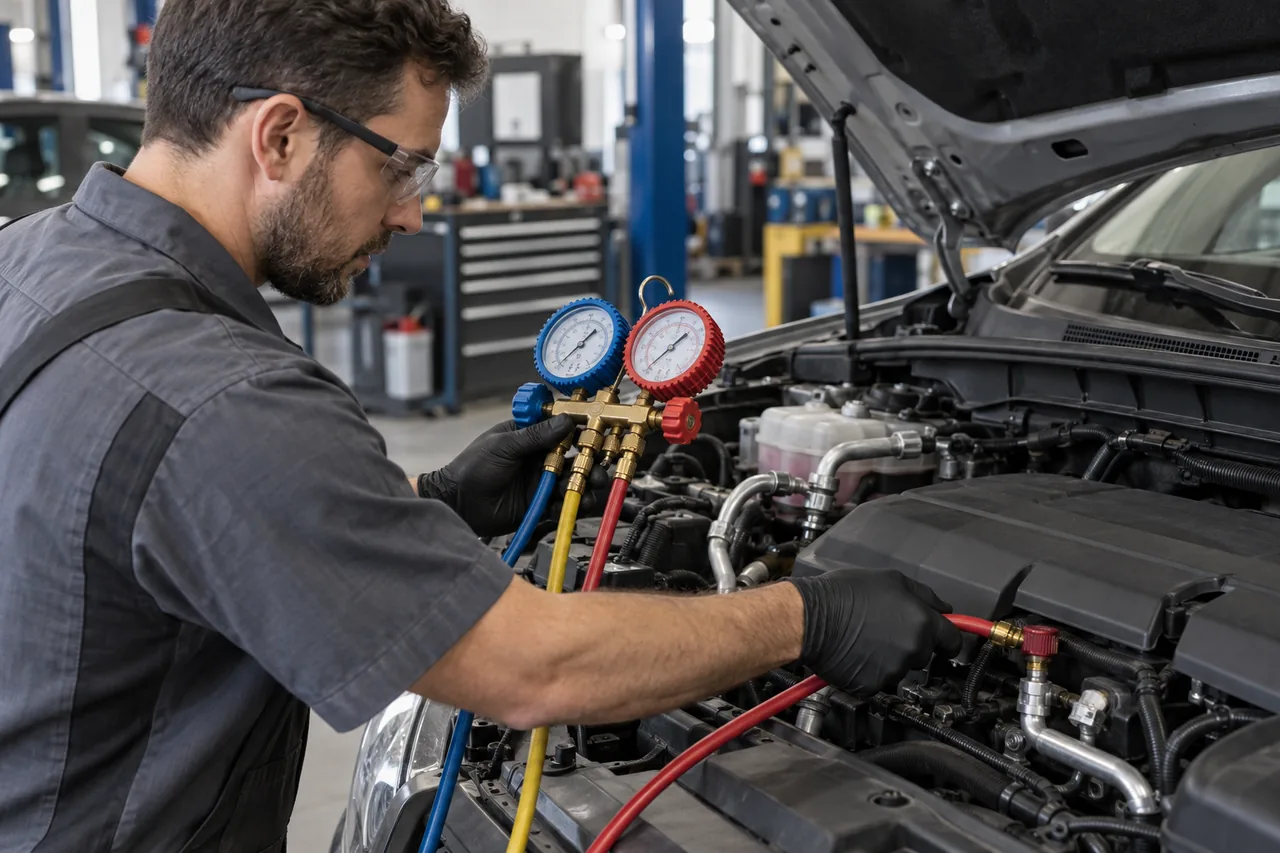
Cooling performance can be affected by refrigerant charge, airflow, electrical controls, pressure sensors, compressor operation, or a physical leak.
Cooling system
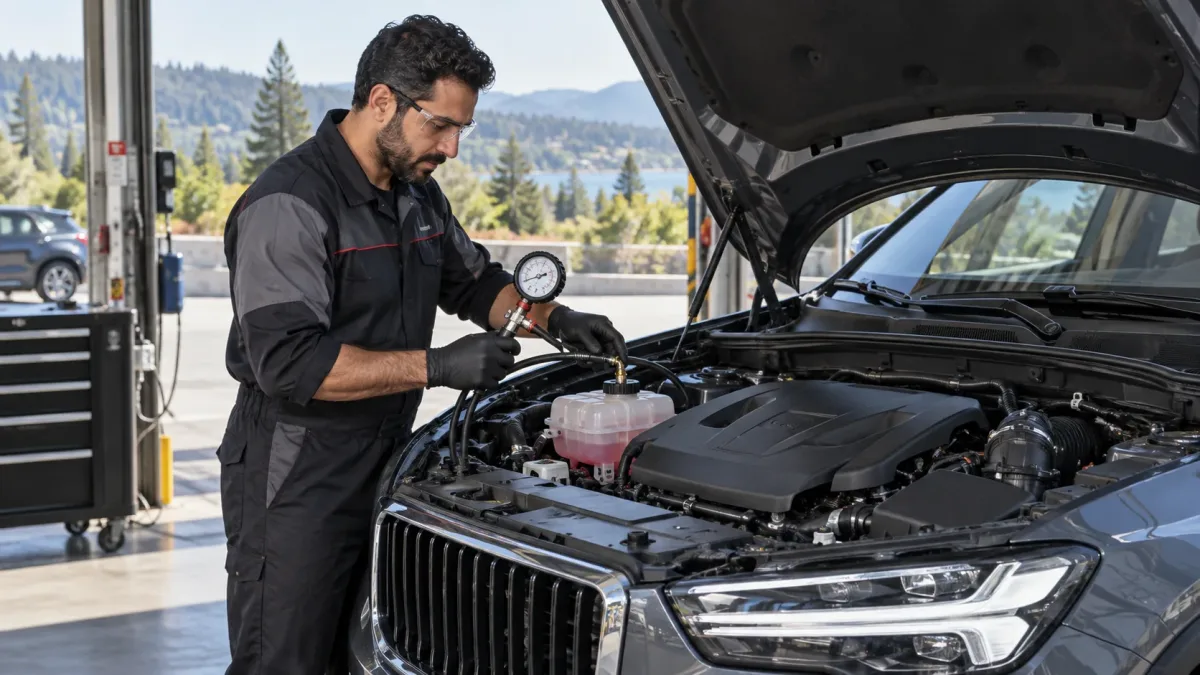
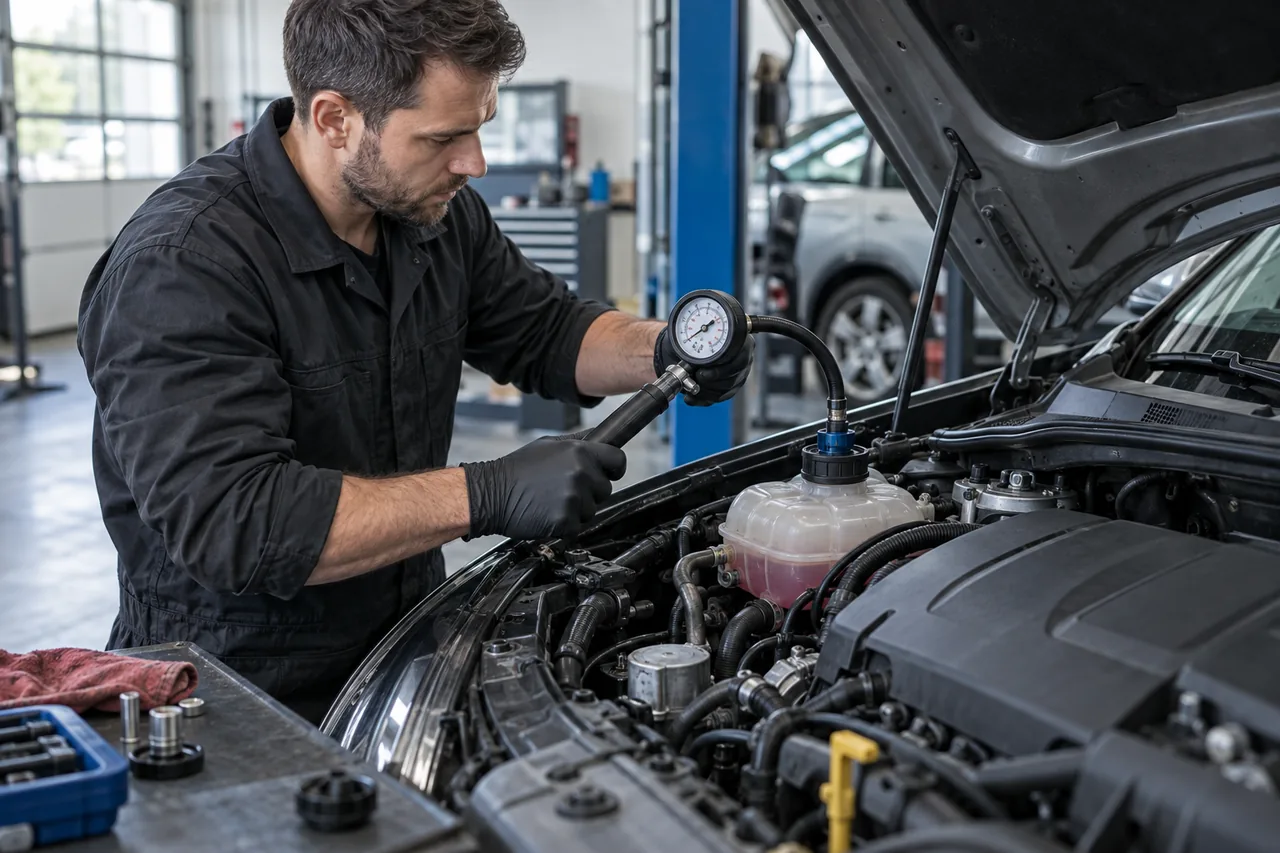
Coolant loss and overheating can come from several components. Inspection and pressure, circulation, temperature, and drive-system checks help isolate the actual fault.
Fuel delivery diagnosis
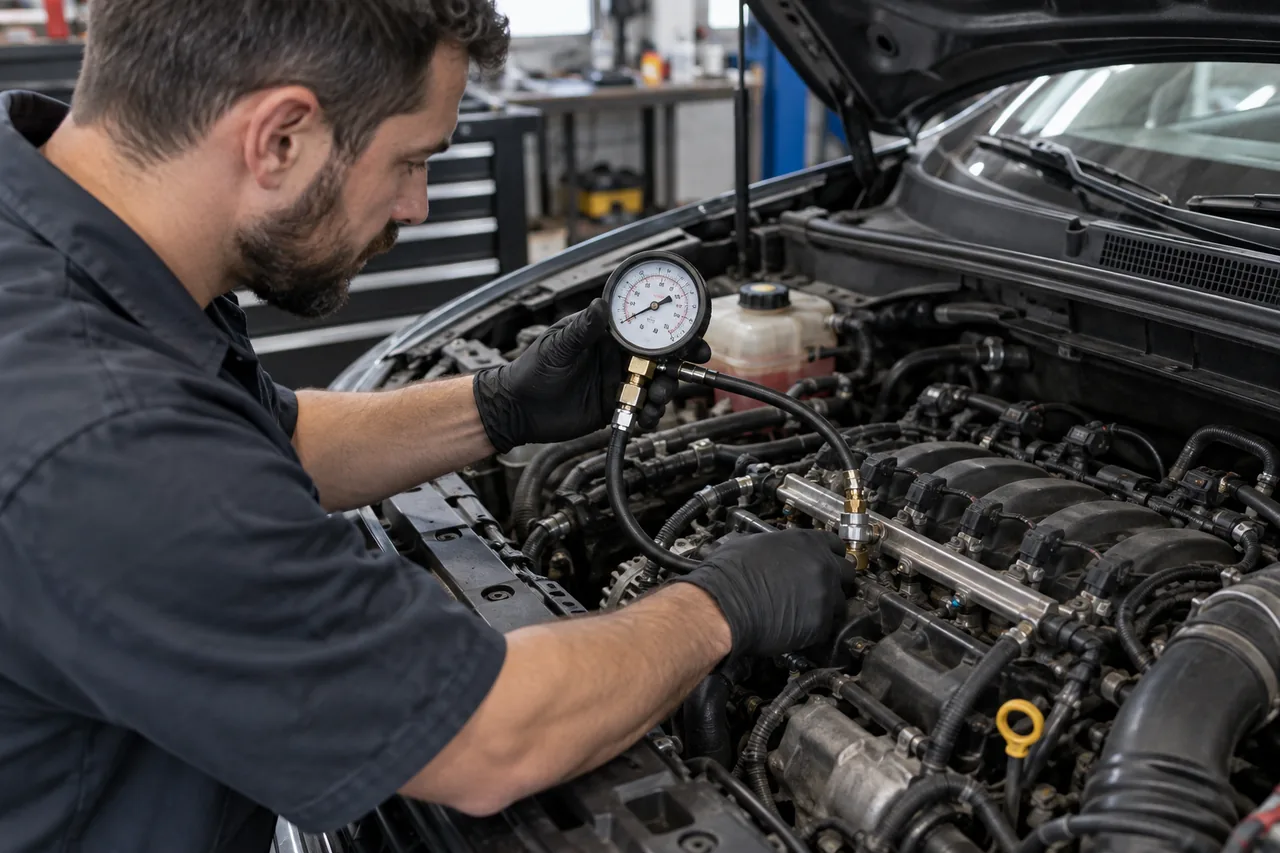
A crank-no-start, stall, hesitation, low power, noise, pressure code, or lean condition can involve fuel quantity or quality, electrical supply, an in-tank pump, controller, filter, regulator, pressure sensor, high-pressure pump, injector, air metering, ignition, compression, or engine control. The word “fuel” in a symptom or code does not identify the failed part.
Ignition service and diagnosis
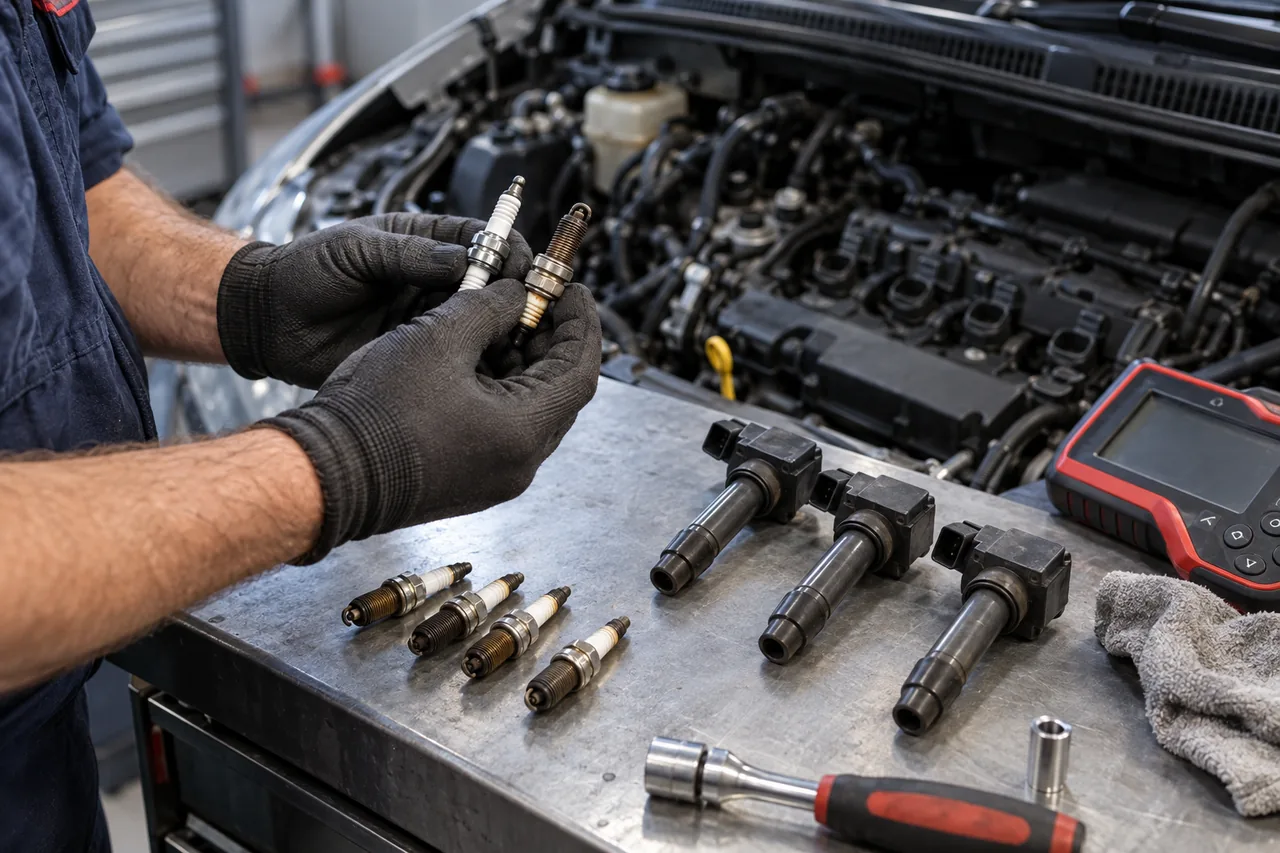
Spark plugs are scheduled wear items on many gasoline engines, but a misfire can also involve ignition coils, wiring, voltage, fuel delivery, air distribution, compression, valve timing, oil or coolant contamination, and control strategy. A plug or coil named in a code is a starting point for testing, not automatic authorization.
Timing-drive service
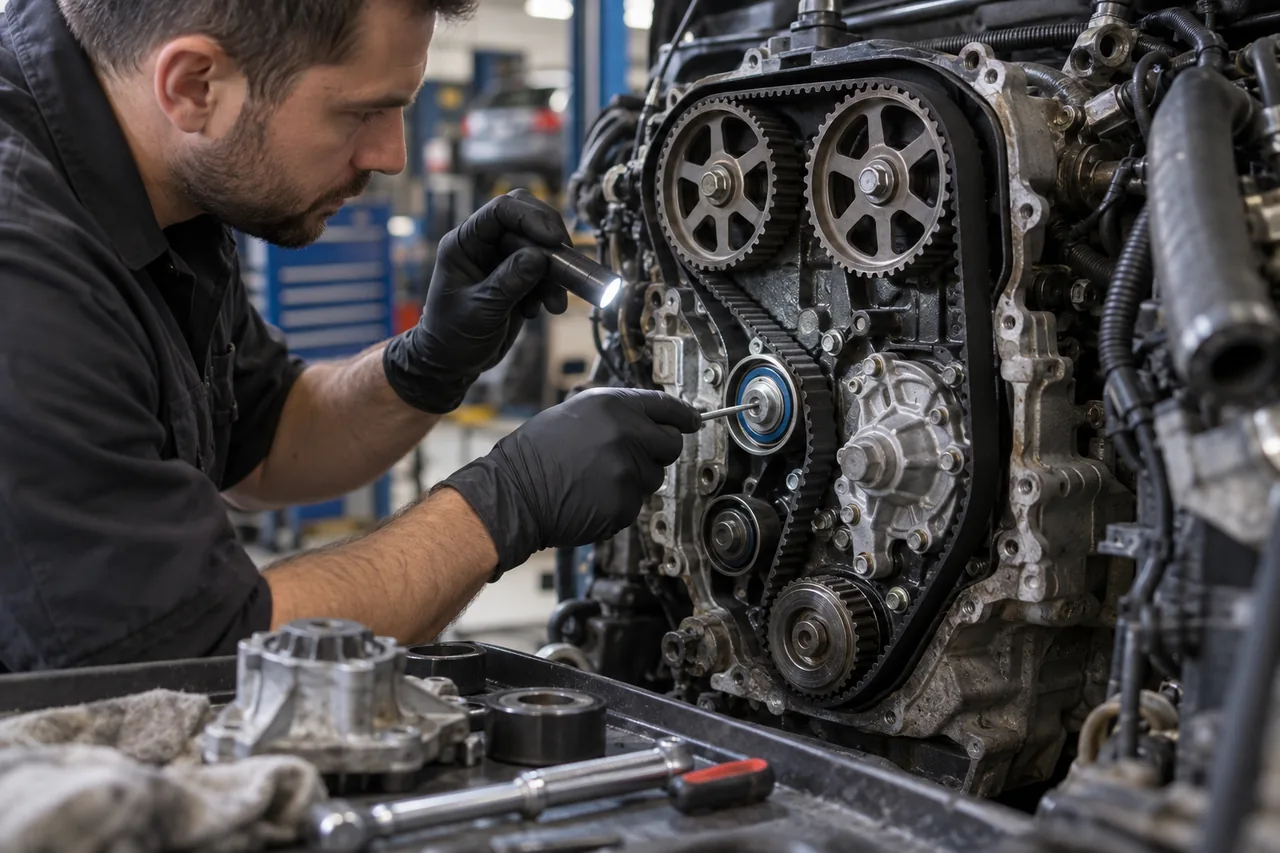
A timing belt synchronizes the crankshaft and camshaft on engines designed to use one. Failure or incorrect installation can stop the engine and, on some designs, allow internal contact. The correct interval, components, tools, locking method, coolant work, and verification are specific to the exact engine.
Lubrication service and diagnosis
An oil change is scheduled maintenance. A low-level message, red pressure warning, temperature fault, leak, smoke, consumption complaint, debris finding, or abnormal noise is a diagnostic concern. The two may occur together, but fresh oil alone does not prove that lubrication pressure, sensing, sealing, or internal condition is healthy.
Steering-assist diagnosis
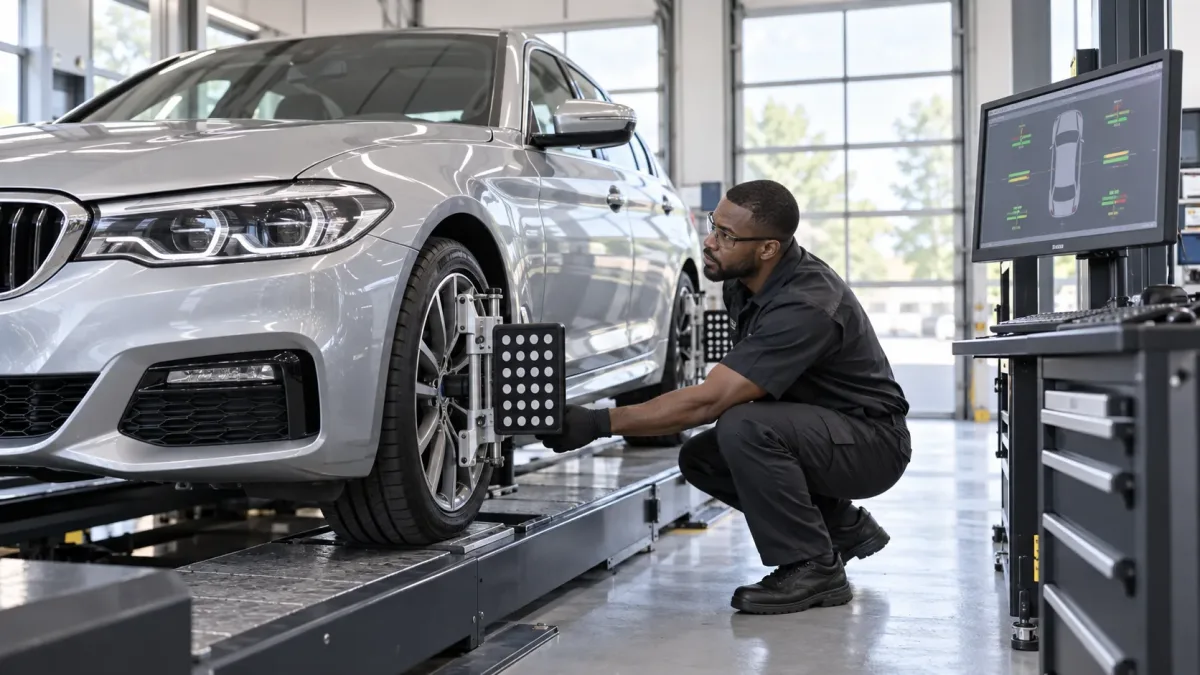
Heavy, inconsistent, noisy, pulling, or warning-affected steering can involve tires, alignment, suspension, mechanical binding, hydraulic fluid and pressure, an engine-driven or electric pump, electrical supply, sensors, software, the steering gear, or calibration. Many modern vehicles have no power-steering fluid at all.
Transmission diagnosis
Harsh, delayed, slipping, shuddering, noisy, or missing shifts can involve fluid level or specification, leaks, temperature, electrical supply, sensors, software, hydraulic control, clutches, gears, bearings, torque transfer, mounts, axles, tires, or engine operation. A fault code or fluid service alone does not define the repair.
Emissions diagnosis
An emissions warning can involve air and fuel measurement, combustion, exhaust sensing, catalyst performance, evaporative containment, exhaust-gas recirculation, secondary air, diesel aftertreatment, wiring, software, or mechanical engine condition. The diagnostic path must show which monitored relationship failed and why.
Engine-mechanical diagnosis
Noise, oil consumption, smoke, low compression, overheating, misfire, metal debris, or a timing-related code can point toward internal engine work, but each can also be produced or worsened by external systems. A responsible plan establishes the failure, cause, damage extent, repair options, and verification method before major disassembly.
Maintenance planning
A mileage label is not a complete maintenance specification. The correct work depends on the exact model and powertrain, manufacturer information, elapsed time, mileage, operating conditions, documented history, present condition, and any active warning or symptom.
Hydraulic brake maintenance
Brake fluid transfers pedal force through the hydraulic system while supporting lubrication and corrosion protection. Its condition matters, but a fluid exchange cannot repair a leak, worn friction components, a failing master cylinder, trapped air from an unresolved fault, damaged hoses, a sticking caliper, or an electronic brake-system problem. Inspect the complete system before treating maintenance as a repair.
Brake-system diagnosis
Noise, vibration, a warning lamp, longer stopping distance, pulling, or an unusual pedal can come from different parts of the foundation brake, hydraulic, assist, electronic-control, wheel, or tire system. A safe recommendation connects the symptom to measured evidence and the vehicle-specific wear limits.
Electrical diagnosis
A dead battery, slow crank, warning lamp, intermittent no-start, or repeated low-voltage fault does not identify a single failed part. The battery, alternator, starter, cables, grounds, control strategy, and vehicle loads must be evaluated under the condition that produces the symptom.
Electrified vehicle diagnosis
Battery-electric vehicles, hybrids, and plug-in hybrids combine familiar chassis and low-voltage systems with model-specific high-voltage batteries, power electronics, electric machines, charging equipment, thermal management, controls, and safety interlocks. A warning, range change, charging problem, or no-READY condition does not identify a battery pack—or prove that a general repair facility is equipped and authorized for the required high-voltage work.
Inspection and documentation
A useful report identifies the vehicle and concern, records where each finding was observed, adds measurements or limits when they matter, explains consequence and urgency, and keeps inspection findings separate from approved repair work.
Engine management service
A mass airflow reading can be wrong because of the sensor, but intake leaks, air-filter problems, wiring, contamination, fuel delivery, exhaust leaks, or mechanical faults can produce similar symptoms and data.