
Inspection and documentation
A digital inspection should make the evidence easier to review—not just add photos
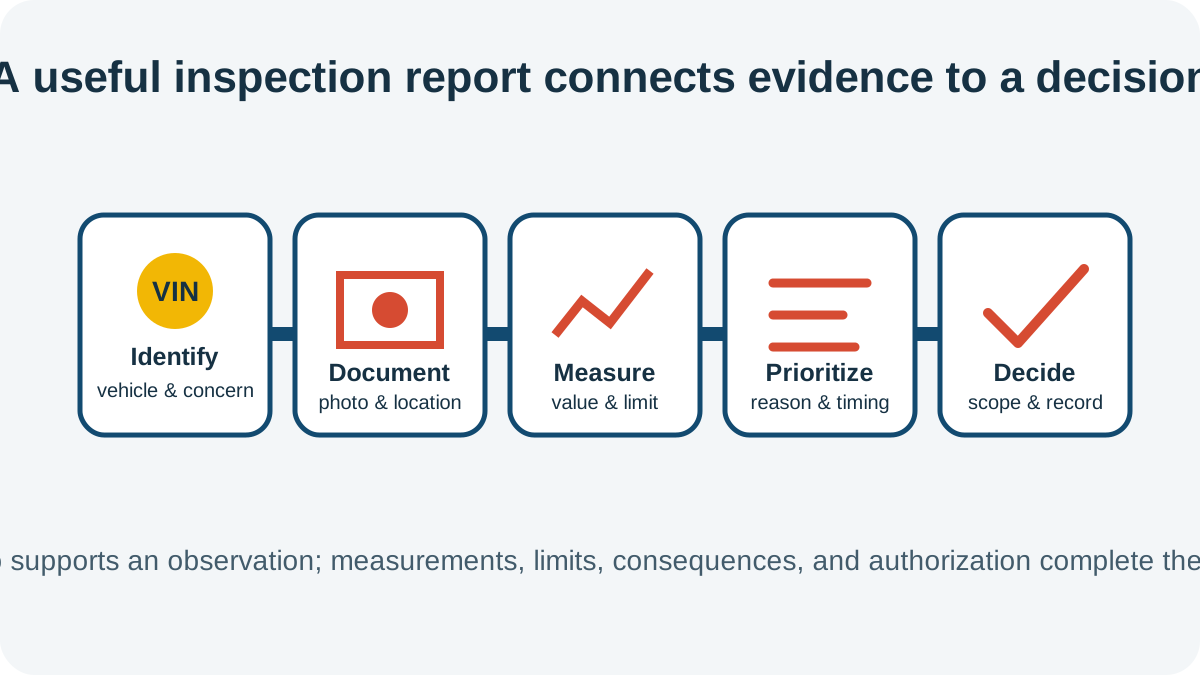
A useful report identifies the vehicle and concern, records where each finding was observed, adds measurements or limits when they matter, explains consequence and urgency, and keeps inspection findings separate from approved repair work.
Clarify what “inspection station” means before choosing the service
A general condition or digital inspection is not automatically a government safety inspection, emissions-certification test, Washington State Patrol VIN or rebuilt-vehicle inspection, warranty inspection, insurance appraisal, rideshare check, or buyer-specific pre-purchase inspection. Each has a different authority, checklist, documentation, equipment, and acceptance rule. Ask for the exact purpose and receiving organization before assuming a repair facility can issue the required document.
Washington’s Department of Ecology states that the state emissions-check program ended January 1, 2020 and an emissions test is no longer required before registration renewal. A page using the historical phrase “car inspection station” should not imply that this retired program still operates or that this business holds a current government designation. Emissions diagnosis and lawful repair remain distinct services, while official title or specialty inspections must follow the responsible agency’s current process.
A pre-purchase inspection supports a decision but does not guarantee the vehicle
The Washington Attorney General advises used-car buyers to obtain an independent mechanical inspection before negotiating and describes checking safety equipment, systems, visible damage, and operation under realistic driving conditions. A useful pre-purchase scope can include identity and warning checks, road test where safe, lift inspection, tires, brakes, steering, suspension, leaks, cooling, charging, accessories, scan information, maintenance evidence, visible collision or corrosion clues, and model-specific concern areas.
State what access, disassembly, compression or pressure testing, body measurement, recall research, title research, battery testing, fluid analysis, and road conditions are excluded unless specifically added. A snapshot cannot guarantee future reliability, reveal every intermittent or concealed defect, authenticate every record, determine market value, or replace a body, legal, title, or manufacturer-specialist review. Findings should identify evidence, limits, likely next tests, and decision significance without calling the vehicle “certified.”
Start with the vehicle, visit purpose, and inspection scope
The report should identify the vehicle accurately, record mileage, and state why it was inspected: a specific symptom, routine maintenance visit, used-vehicle evaluation, seasonal check, or broader condition review. Model year, engine, drivetrain, option package, previous repairs, and modifications can change what is visible and which limits apply. A generic checklist without that context can look complete while answering the wrong question.
Agree on scope before the inspection begins. A visual multipoint inspection does not automatically include disassembly, electrical diagnosis, pressure testing, alignment measurement, compression testing, or verification of every concealed component. The report should say what was and was not inspected so an unchecked item is not mistaken for a passed item. Current availability and delivery method must be confirmed with the provider rather than inferred from this educational page.
Every finding needs an exact location and observable condition
“Leak,” “worn,” or “dirty” is too vague for a durable record. A better entry names the system and location, describes the condition, and records whether it is active, residual, intermittent, or not yet confirmed. For example, fresh fluid at a lower hose connection differs from old residue spread across an undertray, and an inner front tire with exposed cord differs from generalized tread wear.
Photos should establish context as well as detail. One wider image can show where the component sits, while a close image can show the defect. Markups can help, but they should not hide the original view. The image should be clear enough to support the written observation, yet a photo alone cannot measure play, pressure, electrical integrity, fluid specification, or an internal mechanical condition.
Measurements and reference limits turn opinions into evidence
When a recommendation depends on quantity, record the value, units, method, and reference used. Examples can include tire tread depth and pressure, brake friction-material thickness, rotor thickness, battery or charging test results, fluid level, alignment angles, or diagnostic data captured under a stated condition. Not every observation requires a number, but “below limit” should identify the applicable limit rather than rely on an unlabeled red status.
The reference may come from manufacturer service information, a component specification, a safety standard, or a documented shop policy. Those sources are not interchangeable. A maintenance recommendation based on time or mileage should identify the schedule and vehicle use assumptions, while a condition-based recommendation should show the actual observed condition. If measurement was not possible, the report should state that limitation.
Priority labels should explain consequence and timing
Red, yellow, and green labels are easy to scan but can oversimplify different risks. A useful priority explains why action is recommended, what may happen if the condition progresses, and whether the timing is immediate, soon, at the next service, or simply monitor. Safety, rapid damage, emissions impact, reliability, scheduled maintenance, and optional improvement are different reasons and should not be bundled into one urgency level.
Some conditions justify stopping or limiting operation: exposed tire structure, severe brake concerns, fuel leakage, overheating, smoke, major steering looseness, or another rapidly changing safety issue. Other findings can be measured again at a defined interval. The report should give the reader enough context to discuss timing rather than pressure them with color alone.
Inspection, diagnosis, estimate, and authorization are separate steps
An inspection records condition. Diagnosis determines why a symptom or abnormal condition exists. An estimate defines proposed parts, labor, assumptions, and price. Authorization is the customer’s agreement to a specific scope. A digital platform may display all four, but the report should not silently convert an observation into approved work or imply that a diagnostic conclusion was reached from a photograph.
The Washington State Attorney General explains that repair estimates and invoices should identify the condition, requested diagnosis or repair, necessary parts and labor, and authorization. The FTC likewise advises consumers to obtain written estimates that identify the condition, parts, and anticipated labor. A digital inspection can support that process, but it does not replace the provider’s actual estimate, authorization procedure, or applicable consumer rights.
Review the report before approving a bundled recommendation
Ask which findings address the original concern, which are unrelated maintenance or monitoring items, and which require additional diagnosis. Confirm whether the price includes related fluids, seals, fasteners, calibration, alignment, taxes, disposal, or follow-up checks. If several jobs share access or setup, ask what savings the combination creates and whether any item can safely wait.
Compare the written observation with the attached evidence and ask for clarification when they do not align. A replacement recommendation should identify the failure or limit it addresses, not merely label a component as old. For expensive, invasive, or uncertain work, a second opinion may be useful. Keep the report and final invoice so later inspections can show whether a condition changed.
A retained digital record is useful only when it remains understandable
Download or otherwise retain the report in a format that preserves the date, mileage, vehicle identity, images, measurements, declined work, completed work, and verification notes. A link that later expires is not a complete maintenance record. Avoid sending passwords, payment credentials, precise personal details, or unrelated documents through a general inspection message.
The historical autosportnw.com site referred to digital inspections and a named vendor workflow. Those pages establish topic relevance, but they do not prove which platform, messaging channel, retention policy, or service is used today. This rebuild therefore preserves the inspection method and consumer value without claiming current SmartFlow use, active text or email delivery, or an appointment function until those facts are verified.
Close the loop after approved work
After repair, the record should identify what was performed and how the original concern or measured condition was checked. A before-and-after photo can help for visible items, but verification may also require a road test, leak check, pressure or voltage measurement, scan data, alignment reading, heat cycle, or later monitor completion. The method should fit the repair.
Unrepaired findings should remain visible with a monitoring interval or trigger condition rather than disappear from the history. At the next visit, compare the same location and measurement where practical. That continuity is the main advantage of a digital inspection: it can turn isolated recommendations into a chronological record that a driver can understand and question.