
Brake-system diagnosis
Inspect the complete braking system before choosing pads, rotors, fluid, or hydraulic parts
Noise, vibration, a warning lamp, longer stopping distance, pulling, or an unusual pedal can come from different parts of the foundation brake, hydraulic, assist, electronic-control, wheel, or tire system. A safe recommendation connects the symptom to measured evidence and the vehicle-specific wear limits.
Treat a red brake warning or major change as urgent
A red brake warning that remains on after the parking brake is released, a pedal that suddenly sinks or becomes unusually hard, visible fluid loss, smoke, a burning odor, severe pulling, grinding with reduced braking, or a major increase in stopping distance calls for a safe stop and professional evaluation. Do not keep driving to see whether the condition clears. Arrange transport when normal braking cannot be confirmed.
NHTSA describes the brake telltale as a warning for an applied parking brake or a significant brake-system fault that should be corrected. An amber ABS or stability warning may leave basic hydraulic braking available on some vehicles while disabling an electronic function, but the exact combination and response are vehicle-specific. Use the owner’s manual and diagnosis rather than assuming lamp color proves which component failed.
Capture the symptom before disassembly
Record whether the concern occurs on the first stop, after warming, at low speed, during highway braking, while turning, only in wet weather, or after recent tire, wheel, suspension, or brake work. Note pedal travel and firmness, steering-wheel or body vibration, sound location, warning messages, and whether the vehicle pulls consistently. These details determine which safe inspection and road-test conditions matter.
Do not use an uncontrolled hard stop as a diagnostic shortcut. A road verification, when safe, should reproduce the customer concern without endangering traffic or overheating a damaged system. Pre-scan information and visual observations should be preserved before codes are cleared or components are moved, because an intermittent electrical or hydraulic condition can disappear in the workshop.
Measure friction parts instead of judging through the wheel
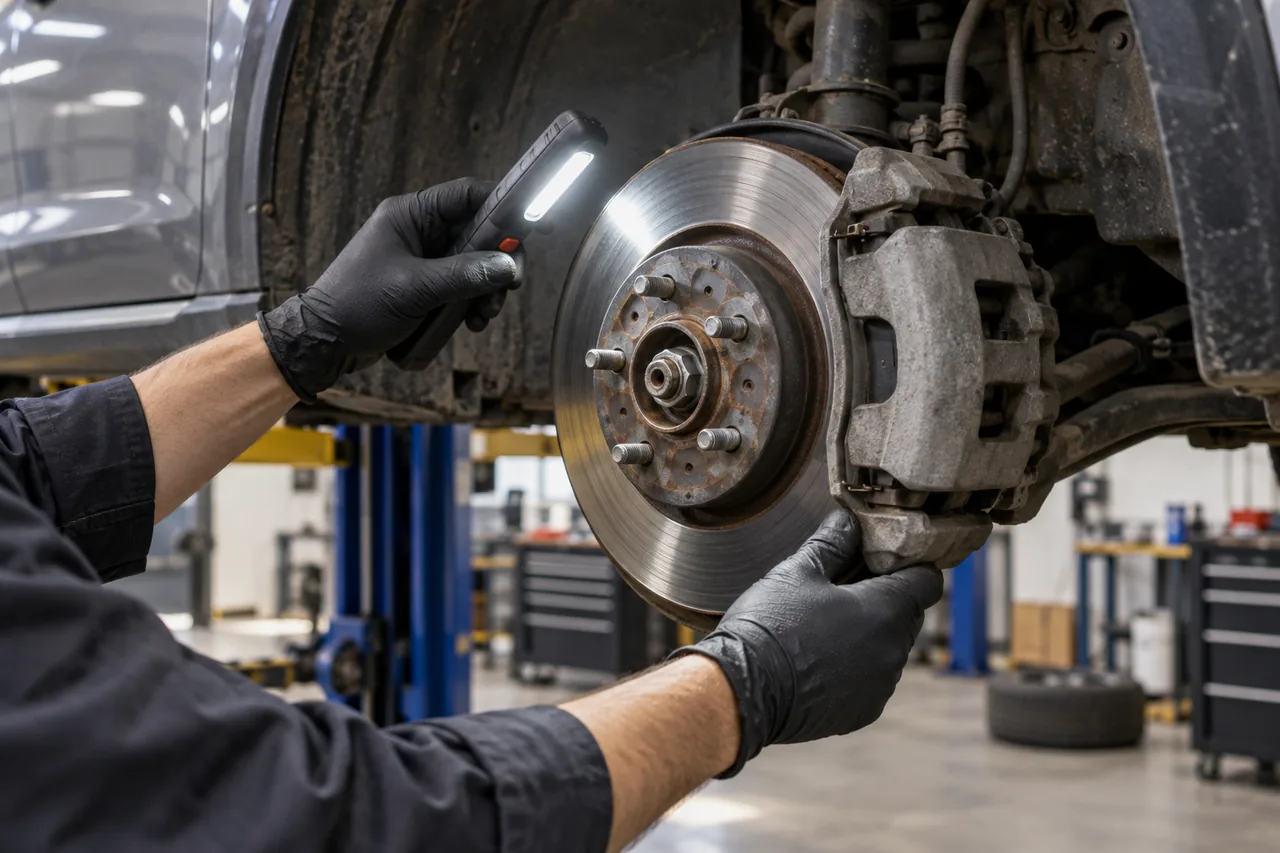
Pad thickness should be measured at the relevant inner and outer positions, not estimated from the most visible edge. Tapered or side-to-side wear can point toward slide, piston, hardware, hose, mounting, or alignment concerns. Rotors require comparison of measured thickness, thickness variation, runout where specified, surface condition, heat evidence, and the manufacturer’s minimum or machining limit.
Brembo notes that removed pads and rotors preserve useful evidence about operating faults in calipers, pads, bearings, and related components. A rusty outer band, lip, groove, blue area, crack, or transfer layer must be interpreted with measurements and service information. “Looks worn” is not a complete estimate, while a part above a numeric limit is not automatically free of every defect.
Noise and vibration have more than one cause
A high-frequency squeal may involve pad formulation, surface condition, hardware, movement, contamination, glazing, temperature, or installation. A scrape or grind may indicate contact beyond the intended friction material, but shields, stones, bearings, or other rotating parts can imitate brake noise. Inspect before naming a part, and avoid applying lubricant to friction surfaces.
Pedal pulsation or steering vibration can be associated with rotor thickness variation, runout, hub-face condition, wheel installation, bearing play, tire or wheel problems, or suspension movement. Correct diagnosis may require measuring the rotor and hub, checking wheel and fastener condition, and confirming whether the vibration frequency changes with braking force or road speed. Replacing rotors without finding installation or hub causes can allow recurrence.
Hydraulic diagnosis follows pressure, leakage, and condition
A soft or sinking pedal can involve air, external leakage, internal bypass, hose expansion, boiling, incorrect adjustment, or faults in an electro-hydraulic unit. A hard pedal may involve assist, vacuum or pressure supply, valves, sensors, or mechanical restriction. Fluid level is an observation: a low reservoir can reflect pad wear or leakage, and topping it off does not repair either cause.
Brake-fluid service should follow the correct specification, manufacturer interval or supported condition test, and an appropriate exchange procedure. Fluid types are not interchangeable merely because the names look similar. Opening a modern ABS or brake-by-wire system may require a scan-tool bleed sequence or service mode. The estimate should state why fluid service is recommended and keep it distinct from repairing a leak or replacing friction parts.
Calipers, hoses, hardware, and parking brakes affect wear
A wheel that runs hot, drags, wears one pad rapidly, or pulls can involve a sticking piston, slide, pad fit, collapsed hose, hydraulic command, wheel bearing, parking-brake mechanism, or installation fault. Compare sides under controlled conditions and inspect dust boots, seals, guide surfaces, hoses, routing, hardware, and mounting. Temperature difference supports a finding but does not identify the failed part by itself.
Electronic parking brakes often require a documented service mode before rear brake work. Forcing a motorized mechanism can damage it or create calibration faults. Cable-operated systems also need correct release, adjustment, and lever return. Any recommendation should distinguish reusable parts, required hardware, seized or damaged components, and work that became necessary only after direct inspection.
ABS diagnosis is not the same as pad inspection
ABS and stability systems compare wheel-speed and other vehicle information, operate hydraulic valves and pumps, and communicate with multiple control modules. A wheel-speed code can involve the sensor, tone ring or encoder, bearing, wiring, connector, air gap, tire-size difference, power supply, module, or network. Read the complete code and data context before replacing the named sensor.
Low battery voltage, wheel-bearing movement, damaged wiring after suspension work, or mismatched tires can create warnings that overlap with a brake complaint. Preserve codes and freeze-frame information, inspect the foundation brakes, and graph relevant wheel-speed data when appropriate. A scan result should guide circuit and mechanical tests; it is not proof that the most familiar part is defective.
Define a complete repair scope and authorization
A useful estimate identifies the affected axle and side, measured pad and rotor condition, specification source, caliper or hydraulic findings, required hardware, fluid work, electronic service procedures, and why each item is included. Pads on the same axle are normally treated as a set, while rotor reuse or replacement must follow condition, dimensions, and the applicable procedure. Do not compare prices until the scopes describe the same work.
Wheel installation is part of the repair. Brembo emphasizes correct wheel tightening torque because clamping affects safe operation and can contribute to distortion or damage. The procedure may also require cleaning hub faces, indexing or measuring runout, replacing one-time-use fasteners, bedding friction material, calibrating electronic systems, and documenting any deferred finding.
Verify braking after assembly and after a heat cycle
Before movement, establish a firm pedal using the specified procedure, check fluid level and leaks, confirm fasteners and hose routing, exit service modes, clear only appropriate records, and verify warning-lamp behavior. Initial bedding or burnishing instructions vary by friction material and vehicle; aggressive generic routines can be unsafe or incompatible with the installed parts.
A controlled post-repair verification should confirm pedal feel, straight stopping, noise and vibration status, release without drag, ABS or parking-brake function where safely testable, and resolution of the original condition. Reinspect for leakage, temperature imbalance, loose wheels, or changed fluid level as the procedure requires. The final record should show what was measured before repair and what evidence demonstrates that braking is now operating as intended.