
Engine-management guide
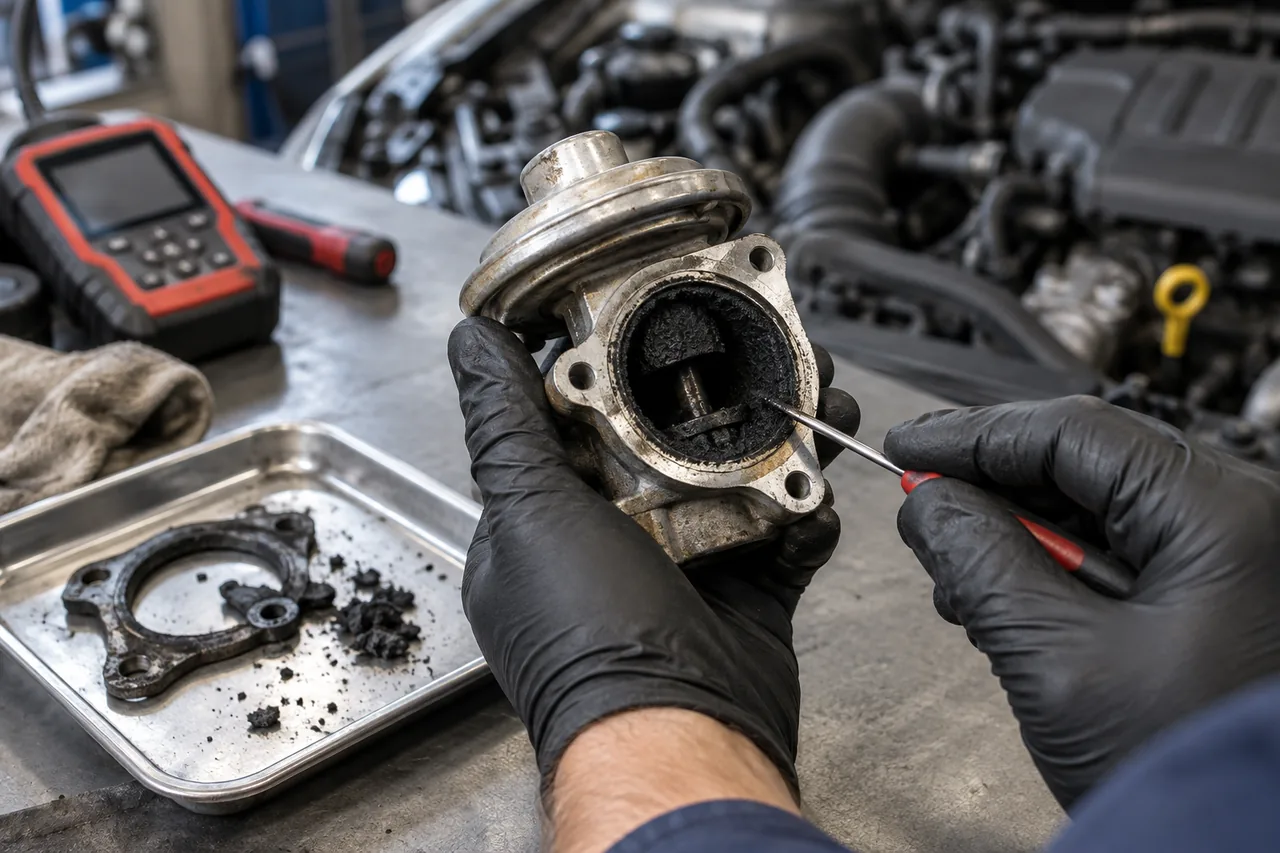
An EGR-related code or drivability symptom can involve the valve, passages, cooler, vacuum or electrical control, sensors, wiring, airflow data, or another engine condition. Replacement is justified only after the system’s commanded behavior and actual response are compared.
Engine-management guide
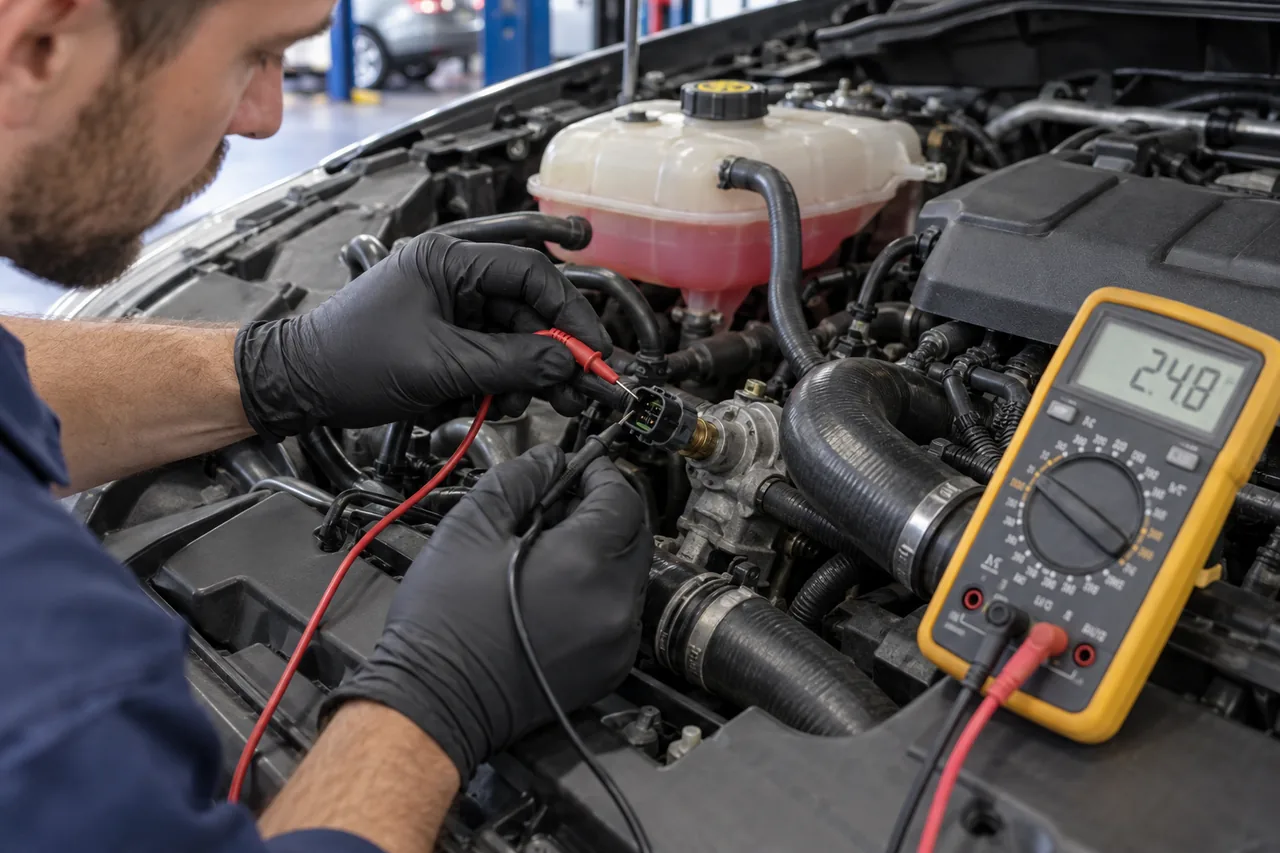
An implausible coolant-temperature reading can come from the sensor, connector, wiring, reference or ground circuit, trapped air, low coolant, thermostat behavior, control module, or an actual cooling-system problem. Diagnosis begins with a cold-soak comparison and a controlled warm-up—not the code description alone.
Engine-mechanical guide
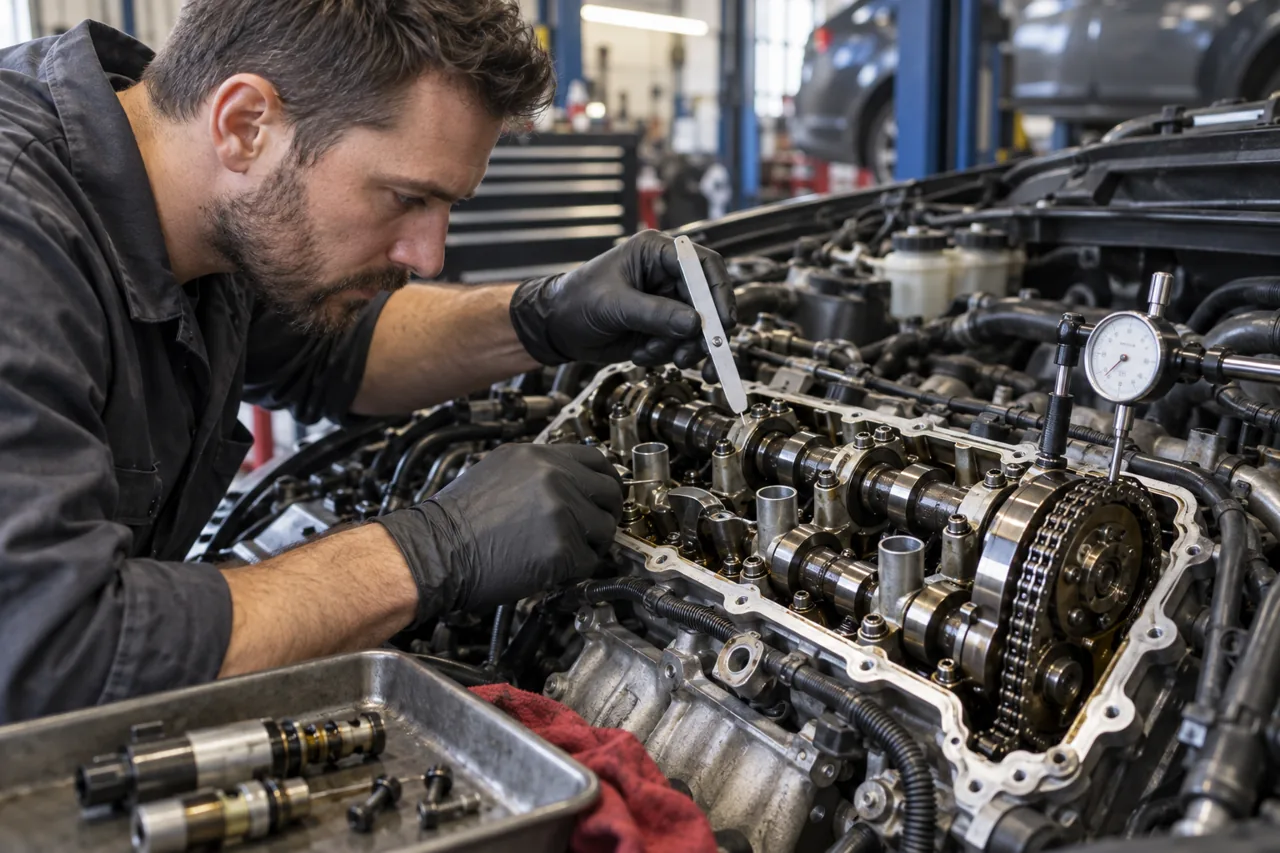
A camshaft-related code or noise does not automatically mean the camshaft itself is damaged. Position sensors, wiring, oil supply, variable-timing actuators, timing-chain or belt condition, valve-train components, and base engine timing must be evaluated together.
Friction brake technical guide
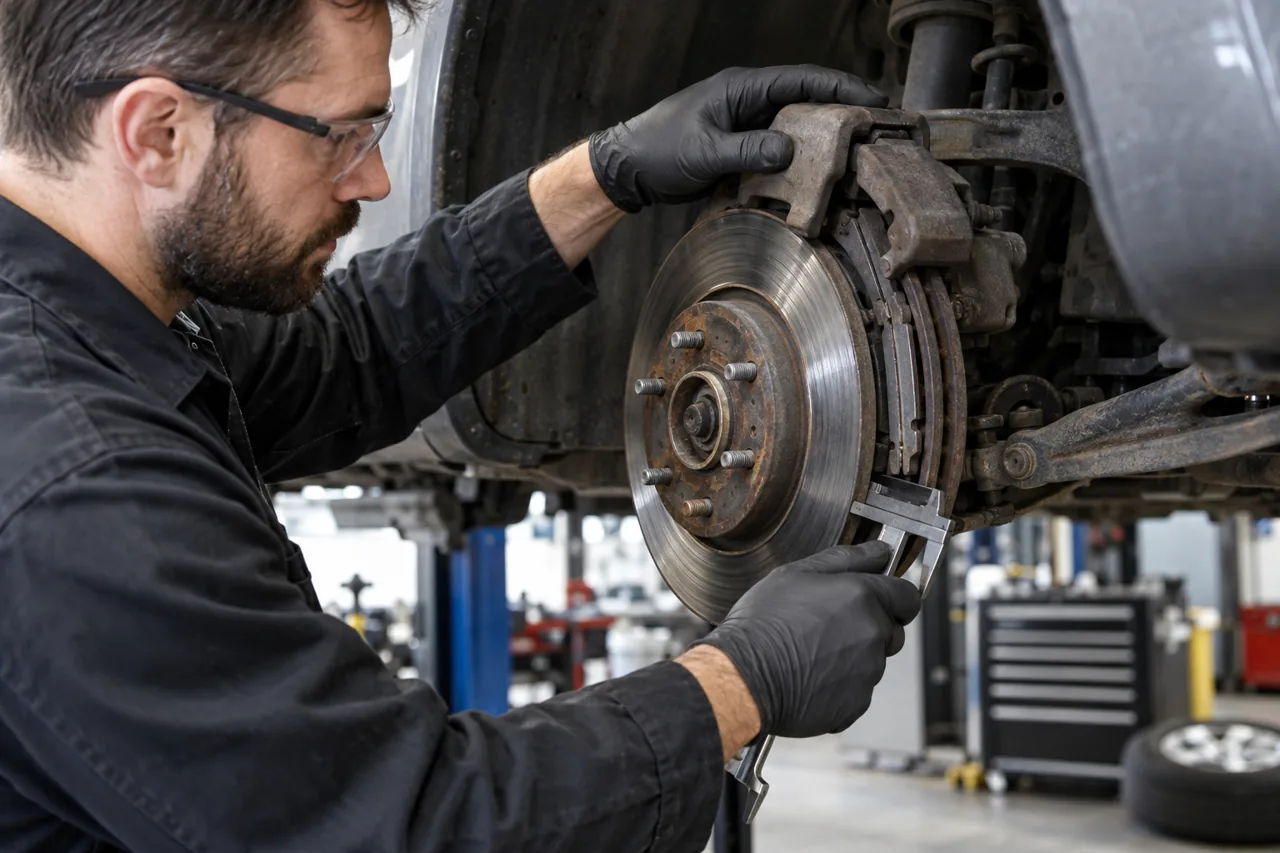
Pads, rotors, calipers, shoes, drums, hoses, hubs, bearings, tires, suspension, hydraulic pressure, parking-brake mechanisms, and electronic service modes interact. A noise, pulsation, hot wheel, thin pad, or worn rotor can be real without identifying why it happened or which complete repair scope will keep the condition from returning.
Low-voltage electrical guide
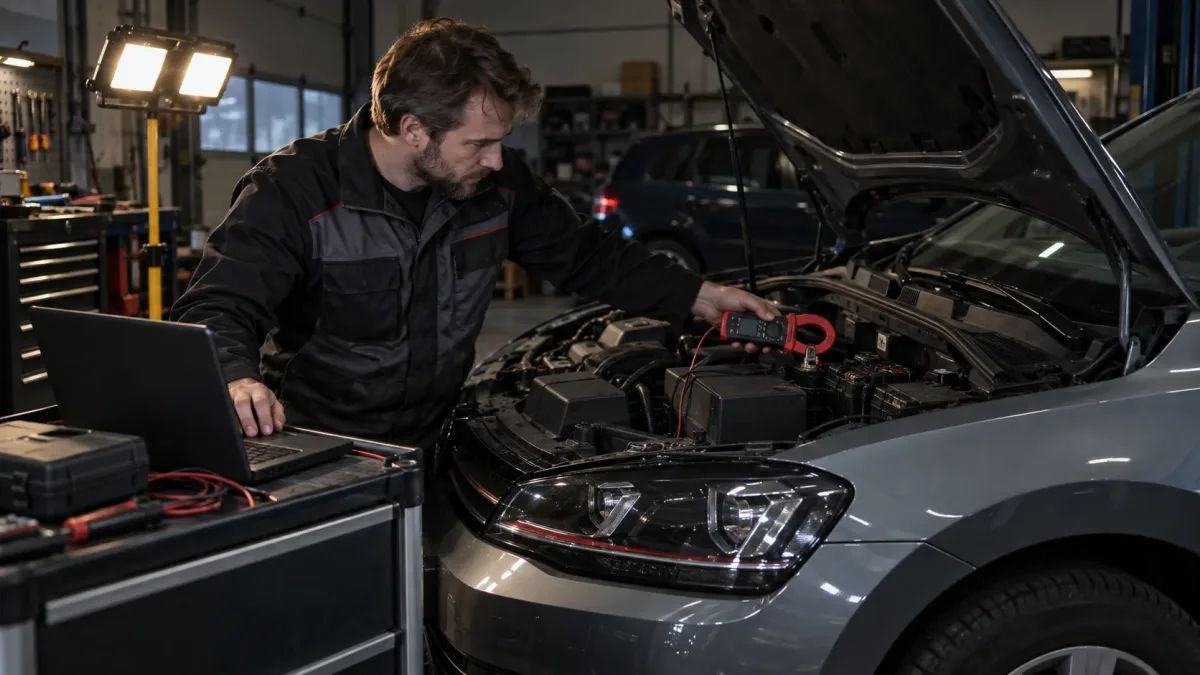
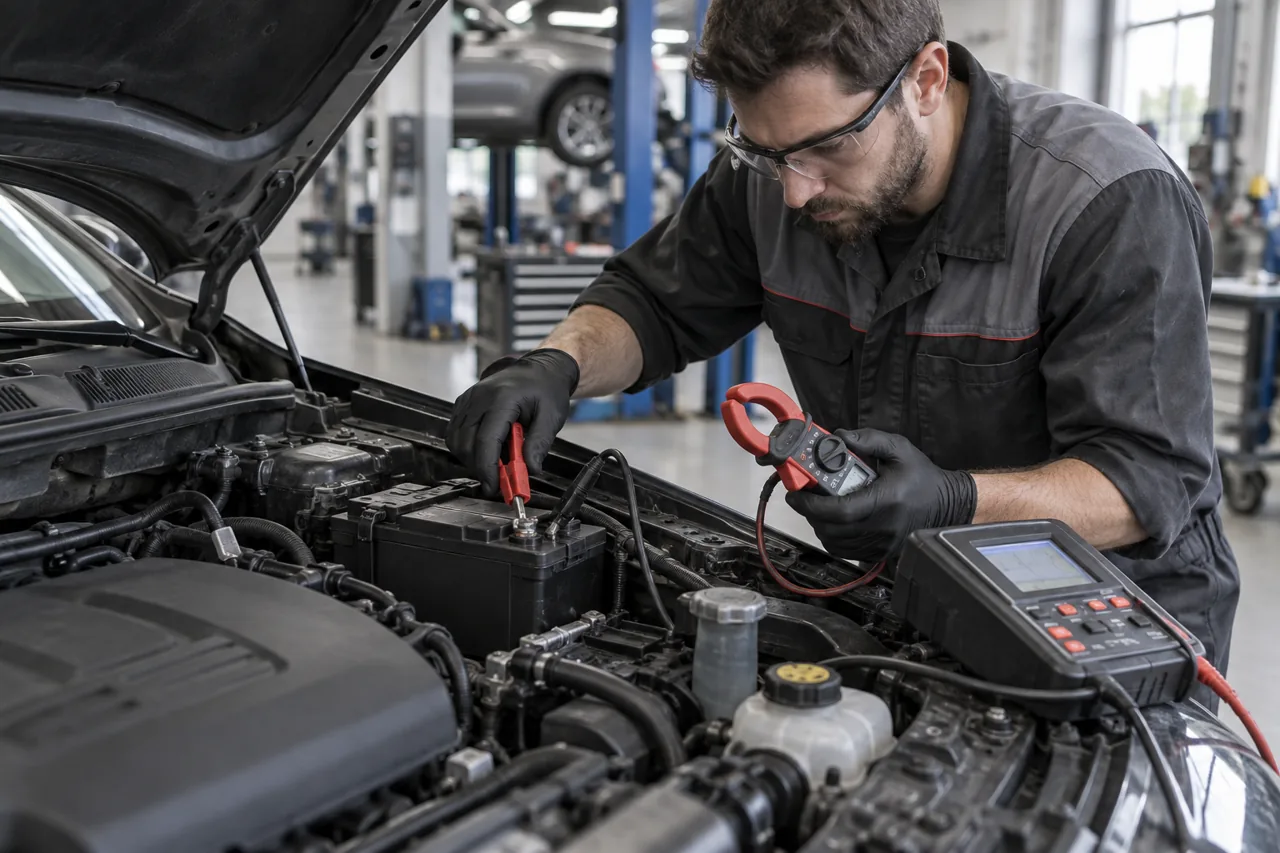
A discharged battery, slow crank, warning lamp, repeated jump-start, low-voltage code, or charging complaint can involve battery condition and charge, terminal resistance, grounds, starter load, alternator or DC-DC output, belt drive, power management, software, parasitic draw, driving pattern, or an accessory. One voltage reading does not identify which relationship failed.
Climate-control technical guide
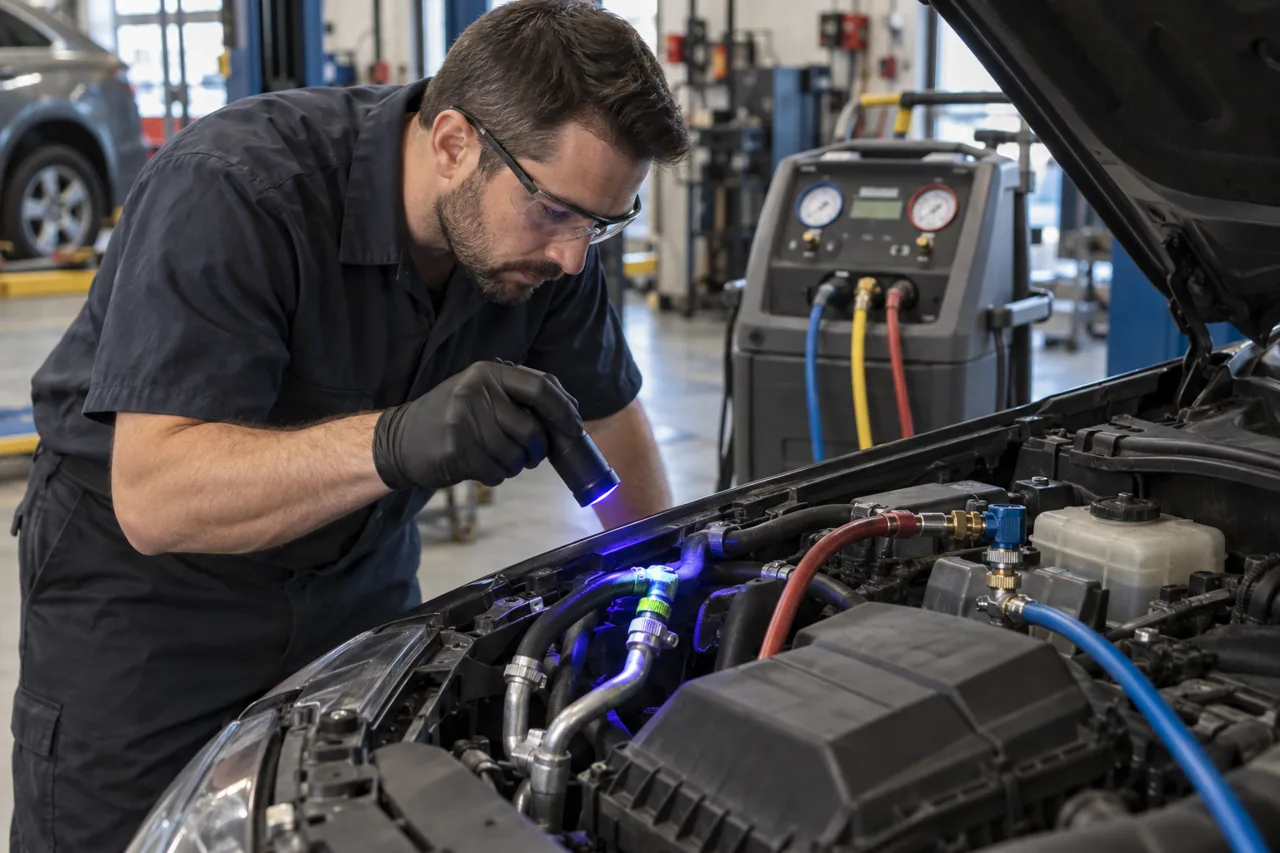
Weak or intermittent air conditioning can involve refrigerant quantity or contamination, leakage, airflow, temperature and pressure sensing, fans, valves, compressor command or internal condition, electrical supply, software, or thermal-management strategy. A compressor noise or low charge is evidence within the system—not automatic proof that one component or a can of refrigerant is the complete repair.
Brake and stability-system guide
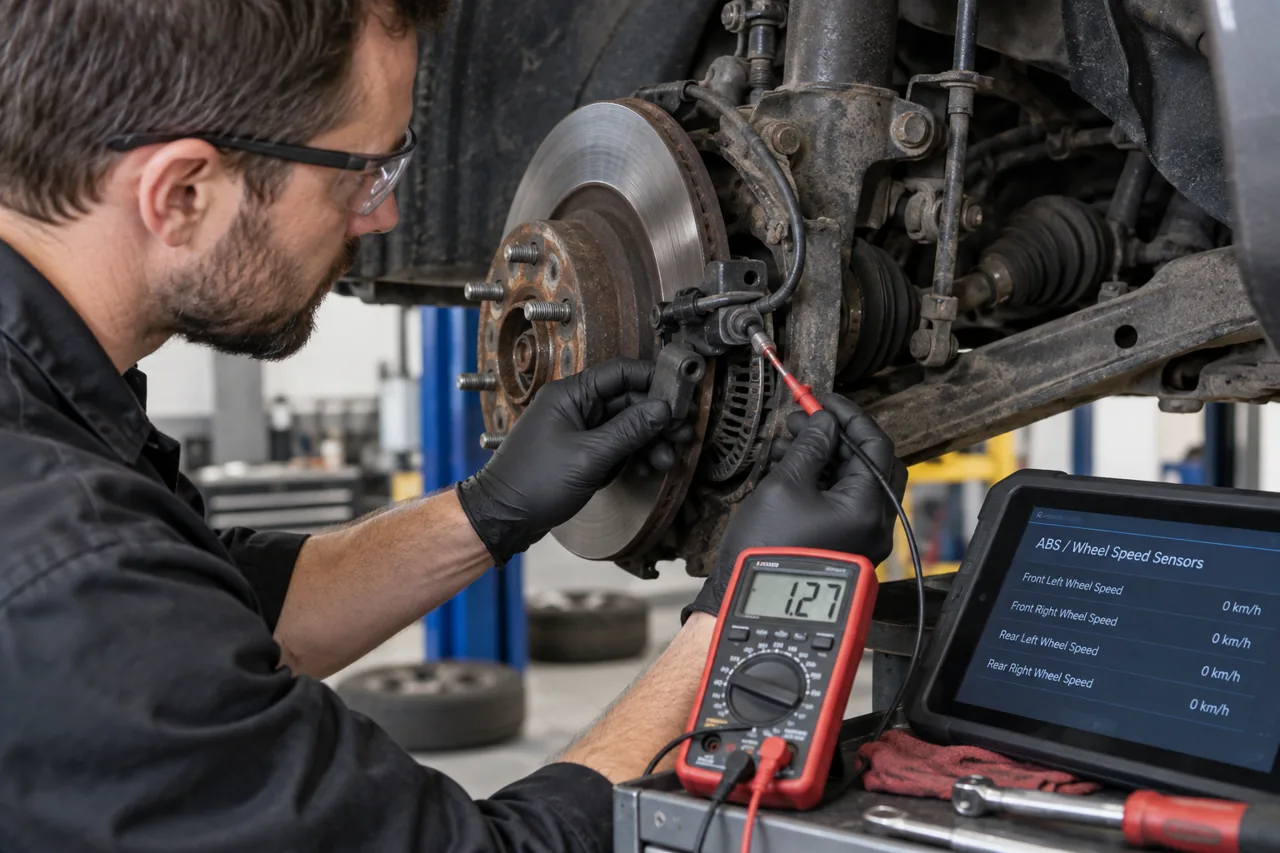
Wheel-speed information supports antilock braking, traction control, stability control, and other networked functions. A warning or code can result from the sensor, supply or ground, wiring, connector, installation gap, encoder or tone ring, wheel bearing, tire differences, module input, mechanical condition, or calibration. Diagnosis should compare the complete relationship before replacing a part.
Engine-management guide
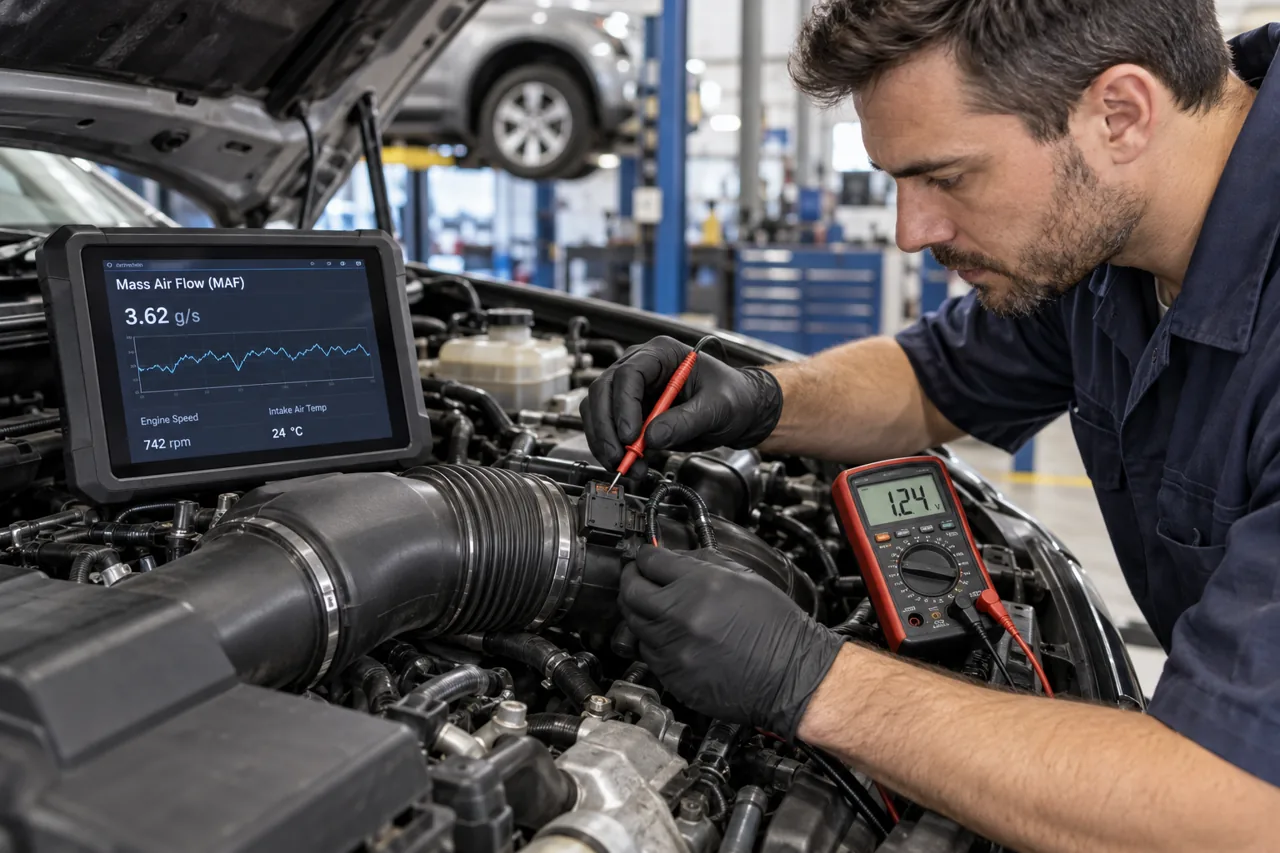
The sensor name may appear in a trouble-code description, but the same warning can be produced by unmetered air, restrictions, wiring, fuel delivery, exhaust sampling, or mechanical engine condition. Replacement should be the result of a test path, not the first step.
Engine-intake and cabin-air technical guide
An engine air filter protects the intake path that supplies combustion; a cabin filter treats air entering the passenger compartment through the heating and air-conditioning case. Dirt, weak acceleration, poor vent airflow, odor, window fogging, dust, noise, or a service reminder can justify inspection, but none proves that a filter alone is the cause. Exact vehicle fitment, maintenance schedule, seal integrity, measured restriction, air-path condition and post-installation airflow define a complete service decision.
Timing-drive technical guide
A timing belt keeps crankshaft and camshaft motion synchronized on engines designed to use one. Its service decision is not based on belt appearance alone, and a tensioner is not an unrelated pulley. Exact engine identity, manufacturer time and mileage limits, documented history, drive layout, tensioning method, oil or coolant contamination, related rotating parts, required tools, engine damage risk, and post-installation verification define the complete job.
Ignition and misfire technical guide
The ignition coil, boot or lead, and spark plug form a high-voltage path, but the cylinder also needs correct air, fuel, compression, timing, temperature, and control. A cylinder code, visible deposit, or successful part swap can provide evidence without proving the complete cause. Diagnosis should preserve the operating condition, test the primary and secondary ignition relationships safely, interpret removed parts in cylinder order, and verify the engine under the load that exposed the fault.
Fuel and evaporative-emissions technical guide
A hard start, stall, loss of power, pump noise, low-pressure code, check-fuel-cap message, fuel odor, or EVAP leak code can involve separate liquid-fuel, electrical, engine-control, or vapor-management faults. Replacing the pump, filter, or cap from a symptom or code skips the evidence needed to distinguish supply voltage, pressure and volume, contamination, injectors, tank venting, seals, valves, lines, and the conditions under which the monitor runs.
Steering and suspension technical guide
A clunk, hum, loose steering feel, pull, vibration, uneven tire wear, or unstable ride can travel through the tire, wheel, hub, knuckle, steering linkage, suspension, brake, axle, and body. Parts located at the same corner can imitate one another. A safe repair decision defines the exact operating condition, supports the vehicle correctly, measures the suspect relationship using the vehicle procedure, and verifies alignment and electronic functions after the work.
Tire and wheel technical guide
A pressure warning, uneven tread, vibration, pull, noisy tire, or damaged sensor does not justify the same service. Safe decisions begin with the exact tire and wheel application, cold inflation pressure, load, damage and wear evidence, vehicle layout, TPMS design, and the operating condition that produces the complaint. This guide separates those decisions and defines what should be verified after the work.
Cooling-system technical guide
An overheat, low-coolant warning, visible leak, collapsed hose, weak cabin heat, or stained radiator does not identify a failed part by itself. The cooling system depends on correct fluid, sealed pressure and recovery, circulation, temperature control, heat transfer, airflow, sensing, and a complete fill. A defensible repair separates those functions before recommending a flush, radiator, hose, cap, thermostat, pump, or engine work.
Vacuum and brake-assist technical guide
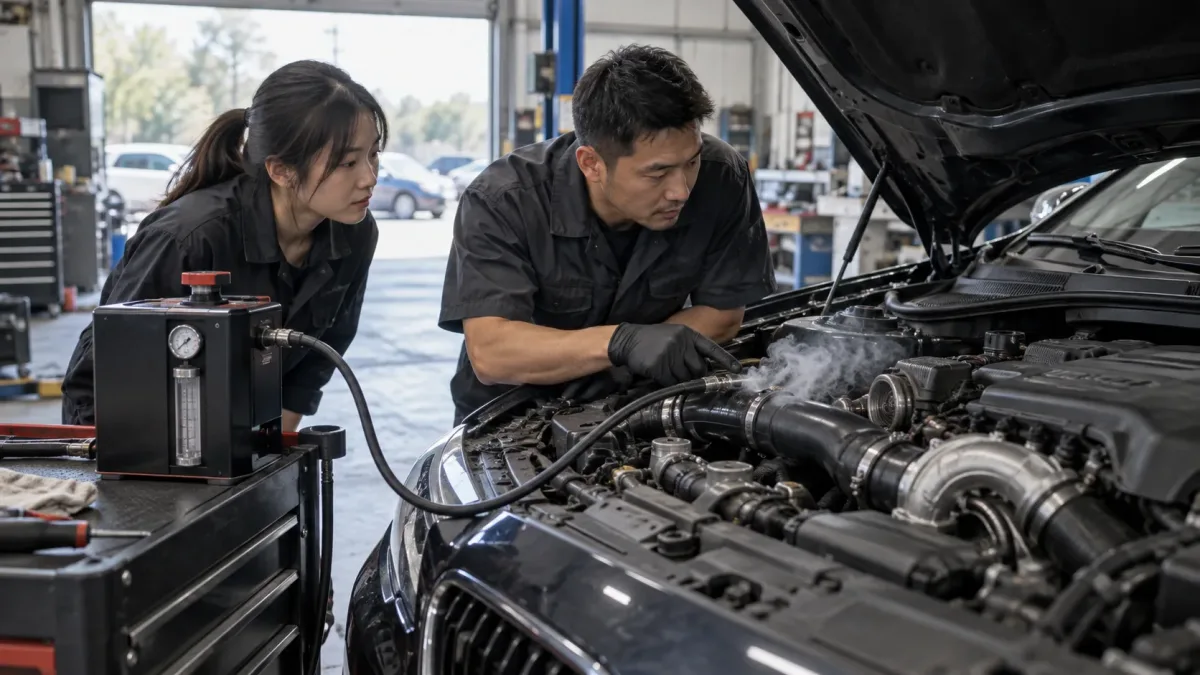
A hard pedal, brake-assist warning, long pump run, hissing, oil leak, vacuum code, or low measured vacuum does not automatically identify a failed pump. The system may depend on intake-manifold vacuum, a mechanically driven pump, an electric pump, a check valve, reservoir, pressure sensor, hoses, brake booster, electrical control, lubrication supply, or a combination. A safe diagnosis separates assist from foundation braking, measures vacuum build and retention under the correct conditions, locates leakage or contamination, and verifies repeated brake applications after repair.
Accessory-drive technical guide
A chirp, squeal, slap, frayed edge, thrown belt, charging warning, rising temperature, heavy steering, or weak air conditioning does not automatically identify a worn belt. The accessory drive can include a multi-rib or V-belt, automatic or manual tensioner, idlers, crankshaft damper, alternator pulley, water pump, A/C compressor, hydraulic steering pump, vacuum pump, and other vehicle-specific equipment. Diagnosis must identify the exact routing and driven loads, preserve the failure pattern, correct alignment or contamination, and verify every affected accessory after installation.
Brake hydraulic technical guide
Brake fluid transfers pedal force and supports lubrication, corrosion protection, electronic hydraulic control, and consistent operation across temperature. But an exchange cannot repair a leak, master-cylinder bypass, damaged hose, sticking caliper, trapped air from an unresolved fault, worn friction components, failed booster, or brake-control problem. A sound decision identifies the exact fluid, distinguishes scheduled exchange from bleeding or contamination recovery, inspects the complete system, follows the vehicle procedure, and verifies pedal and stopping performance afterward.
Glass and visibility technical guide
A chip, crack, water leak, streak, chatter, slow wiper, empty spray pattern, rain-sensor complaint, or driver-assistance warning does not always belong to one part. Safe visibility depends on certified glazing, unobstructed optical zones, secure bonded installation, correctly fitted wipers, a functioning washer system, undamaged trim and drains, and cameras or sensors that remain mounted and calibrated as the vehicle requires. A complete repair decision documents the damage, identifies installed equipment, separates repair from replacement, and verifies visibility in wet and dry conditions.
Engine lubrication technical guide
An oil change is scheduled maintenance; a red pressure warning, high-temperature message, oil-temperature code, leak, smoke, consumption concern, debris finding, or abnormal engine noise is a diagnostic problem. Fresh oil may be part of the repair, but it does not prove that pressure, temperature control, level sensing, wiring, sealing, or internal engine condition is healthy. A complete plan identifies the exact oil requirement, preserves warning data, checks the installed work, and separates a sensor or circuit fault from a real lubrication or thermal event.
Steering-assist technical guide
Heavy steering, intermittent assist, a warning message, fluid loss, whining, foaming, or poor return-to-center does not automatically identify a bad pump or a need for a flush. The vehicle may use a belt-driven hydraulic pump, an electric hydraulic pump, or fully electric assist with no steering fluid. Tires, alignment, mechanical joints, voltage, sensors, software, hoses, the steering gear, and previous repairs can create overlapping symptoms. Diagnosis must establish the architecture, reproduce the concern, and test the complete steering path before choosing fluid service or component replacement.
Exhaust and emissions technical guide
An exhaust noise, odor, oxygen-sensor code, loss of power, or catalyst-efficiency code does not identify a single failed part. Exhaust sealing and flow, combustion, fuel control, sensor circuits, catalyst chemistry, temperature, software, and OBD monitor conditions affect one another. A defensible repair preserves the evidence, protects people from fumes and heat, tests upstream causes, and verifies the complete system instead of replacing the component named in a code.
Cooling-system guide
A leaking or failing water pump can cause coolant loss, noise, unstable temperature, or overheating, but those symptoms are not unique to the pump. A sound repair decision confirms where coolant is escaping, whether circulation is adequate, and whether another fault caused or accompanied the failure.