
Service update · September 2026
Measure why the car pulls before adjusting alignment angles
An alignment printout is useful only when tire condition, ride height, looseness, brake drag, road crown, collision history, and driver-assistance requirements are considered first.
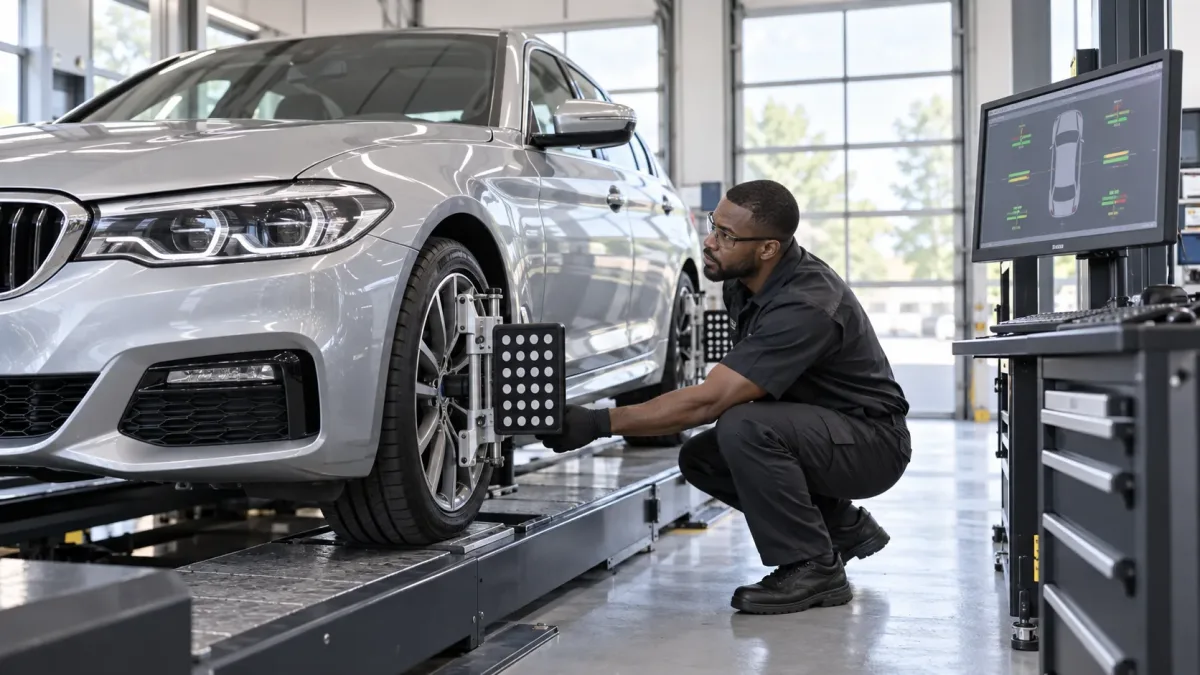
Start with the complaint
Record whether the vehicle pulls on every road, only while braking, under acceleration, after a bump, or only with a particular set of tires. Note steering-wheel position, lane-assistance intervention, vibration, noise, and recent tire, suspension, battery, collision, or subframe work. A crowned road can create drift, while a dragging brake, unequal tire construction, or torque steer can imitate an alignment fault.
Inspect before measuring
Check tire size, pressure, tread pattern, directional installation, irregular wear, wheel damage, ride height, load, and obvious chassis damage. Steering joints, control-arm bushings, ball joints, wheel bearings, strut mounts, springs, dampers, and subframe location must be stable enough to hold an adjustment. Moving a specification into range does not repair looseness or a bent component.
Read the whole printout
Camber, caster, toe, thrust angle, setback, steering-axis relationships, and side-to-side differences describe different aspects of the chassis. Green boxes are not a universal verdict because manufacturer tolerances may be broad and tire wear can develop within them. Compare before and after values, correction capability, vehicle ride height, tire evidence, and the symptom instead of focusing on one colored cell.
Know when calibration follows
Many vehicles use steering-angle, yaw, camera, radar, or active-steering data. Alignment, steering, suspension, subframe, collision, battery, or module work may require centering, initialization, or calibration according to exact service information. The estimate should say whether those operations are required, included, outsourced, or not applicable. A straight steering wheel does not prove the electronic reference is correct.
Verify on a representative road
Center the wheel, confirm stable tire pressure, repeat the original road condition, and distinguish normal crown response from a persistent pull. Recheck for warning messages and confirm driver-assistance behavior where safe. The final record should include measurements, adjustments made, components that limited correction, calibration status, and the expected tire follow-up. If wear is already established, alignment cannot restore lost tread.
Prepare for a productive appointment
Bring the VIN, current mileage, service records, photographs of warnings or leaks, and a short timeline that includes cold or hot operation, road speed, weather, load, recent repairs, jump starts, fluid additions, and anything that makes the symptom better or worse. Do not clear diagnostic memory or disconnect the battery simply to turn a warning off. Preserve replaced parts or fluid samples when they may help explain contamination, wear, or a repeated failure.
Agree on the initial inspection or diagnostic authorization, the contact method, and the spending limit before leaving the vehicle. Ask the advisor to separate observed condition from diagnosed cause, and immediate safety work from maintenance or future planning. If a test requires extended driving, disassembly, cooling time, or a return visit, that limit should be explained before the work expands. A useful estimate defines what is included and which finding could change the scope.
Understand the limits and follow-up
This guide explains a decision process; it cannot inspect the vehicle or establish that an active symptom is safe. Exact specifications, test limits, fluid requirements, torque values, programming, calibration, and service procedures depend on the VIN and installed equipment. Recall and campaign status should be checked with the manufacturer or NHTSA by exact VIN, while warranty and parts coverage should be confirmed in writing with the provider.
After service, request a plain-language record of the original evidence, confirmed cause, work performed, parts and fluids used, measurements or calibrations completed, and the conditions used for verification. Ask what must be rechecked cold, after a drive cycle, or at a mileage interval. If the same warning, leak, noise, vibration, or performance change returns, record the conditions again and contact the provider promptly instead of repeatedly clearing evidence or adding a product.