
Hydraulic brake maintenance
Match brake fluid service to the exact specification, interval, system condition, and bleeding procedure
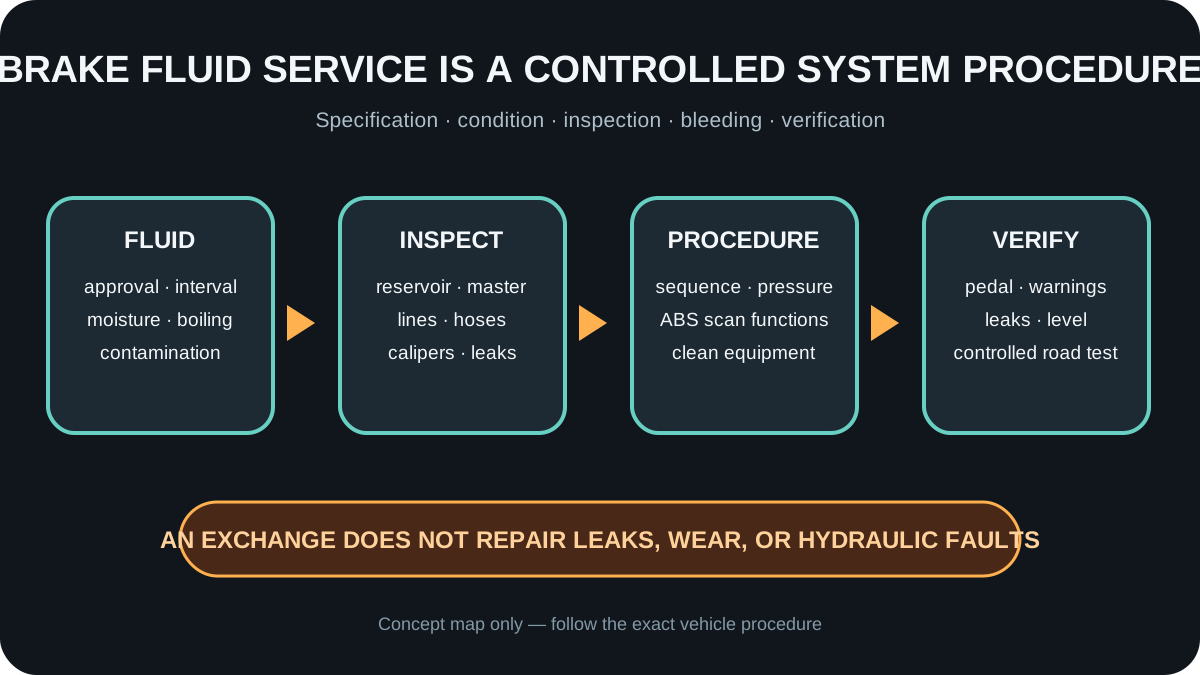
Brake fluid transfers pedal force through the hydraulic system while supporting lubrication and corrosion protection. Its condition matters, but a fluid exchange cannot repair a leak, worn friction components, a failing master cylinder, trapped air from an unresolved fault, damaged hoses, a sticking caliper, or an electronic brake-system problem. Inspect the complete system before treating maintenance as a repair.
Treat a major pedal change, red warning, or fluid loss as urgent
Stop safely and arrange evaluation when the brake pedal suddenly sinks, becomes very soft or unusually hard, braking force drops, the vehicle pulls severely, a red brake warning stays on after the parking brake is released, fluid is visibly leaking, or smoke and a burning odor appear near a wheel. Do not assume that adding or replacing fluid makes the vehicle safe to drive.
Record when the condition began, warning color and message, pedal travel and firmness, whether pumping changes it, recent brake or collision work, fluid seen under the vehicle, temperature, load, and any downhill or repeated braking event. A fluid service is scheduled maintenance; an active loss of hydraulic integrity needs fault diagnosis, repair, and verification before maintenance can be considered complete.
Use the manufacturer specification and schedule—not color or a universal interval
Confirm the VIN, model year, brake equipment, owner or service information, required fluid standard, viscosity class, and replacement interval. DOT 3, DOT 4, DOT 4 low-viscosity, DOT 5.1, silicone DOT 5, and mineral-oil systems are not selected by cap color or a broad rule. Some electronic brake and stability systems require particular low-temperature viscosity or approval beyond the familiar DOT label.
Do not mix incompatible chemistries, and do not substitute a higher-number fluid merely because the number sounds better. Use a sealed or suitably fresh container that meets every stated approval. Record product name, specification, lot where useful, quantity, date, mileage, and the schedule source so the next service decision has evidence rather than an undated windshield reminder.
Understand moisture, boiling point, viscosity, and corrosion without overreading one test
Bosch describes common glycol-based brake fluid as hygroscopic: absorbed water lowers its boiling point and can allow compressible vapor bubbles under heat. Brembo distinguishes this vapor lock from friction-material brake fade, which can feel similar but has a different cause. Fluid also lubricates hydraulic components and contains additives intended to protect metal and elastomer parts.
A handheld moisture, conductivity, or boiling-point test can support a condition assessment only when the device is suitable for the fluid and used correctly. Reservoir color alone cannot measure water content, remaining additive protection, or fluid trapped at each wheel. Dark or contaminated fluid deserves investigation, but a bright sample does not override the manufacturer interval, wrong-fluid history, opened-system repair, or a known contamination event.
Inspect the whole hydraulic and mechanical system before exchanging fluid
Check reservoir level and cap, master cylinder, booster area, hydraulic unit, rigid lines, flex hoses, junctions, calipers or wheel cylinders, bleeders, parking-brake mechanisms, pads, shoes, rotors or drums, and warning status. Bosch inspection guidance includes fluid level, appearance, moisture or boiling point, lines, hoses, master cylinder, reservoir, and ABS or stability hydraulic equipment.
A low reservoir can reflect friction wear as pistons extend, an external leak, an internal hydraulic fault, or previous service. Topping it off can cause overflow when pistons are later retracted and can hide the evidence of loss. Find the reason before adding fluid. Contamination by petroleum, washer fluid, power-steering fluid, coolant, or incompatible brake fluid may damage seals and require a much larger system-specific repair.
Define whether the job is an exchange, a bleed, a repair fill, or contamination recovery
A maintenance exchange replaces aged fluid according to schedule or supported condition. Bleeding removes air after the system has been opened or when diagnosis proves air is present. Filling after a component replacement supports that repair. Recovering from wrong-fluid or severe contamination is not a routine flush and may require replacement of affected rubber-containing or hydraulic components according to manufacturer direction.
The estimate should state what prompted the work, which circuits and components are included, what method will be used, whether bleeders or hoses are seized or damaged, and what happens if leakage, contamination, broken hardware, or an electronic procedure is discovered. Avoid claiming that a machine “flush” cleans or repairs every internal brake component; the outcome is correct fluid, controlled air removal, and verified function.
Follow the vehicle sequence, pressure limits, and ABS or brake-by-wire procedure
Bosch instructs trained professionals to select fluid and pressure according to vehicle-manufacturer specifications and notes that bleed order varies with master-cylinder location and application. Some vehicles use pressure, vacuum, manual, or scan-tool-assisted steps; some require hydraulic-unit valves, pumps, accumulators, electronic parking brakes, or brake-by-wire modes to be controlled in a defined sequence.
Never let the reservoir run dry, exceed the approved pressure, reuse extracted fluid, or improvise a sequence from another vehicle. Protect paint and electrical components from spills, keep the container closed to limit moisture exposure, use clean dedicated equipment, and prevent dirt from entering the reservoir. A blocked bleeder, damaged screw, corroded line, or leaking adapter should stop the process for scope review rather than invite extra force.
Pedal feel after service must be evaluated against system design and the original concern
After bleeding, confirm the reservoir level by the specified method, cap installation, dry connections and bleeders, warning status, and a firm, stable pedal under the prescribed static check. Pedal behavior differs among conventional vacuum assist, electro-hydraulic assist, regenerative braking, accumulator systems, and brake-by-wire designs. Engine-off pumping or pedal-drop observations must be interpreted with the correct procedure.
A pedal that slowly sinks, remains spongy, changes after pumping, or triggers a warning is not an acceptable result. Possible causes include retained air, external leakage, master-cylinder bypass, hose expansion, caliper or wheel-cylinder faults, hydraulic-unit air, incorrect electronic procedure, or mechanical adjustment. Diagnose the result rather than repeating exchanges until the symptom appears smaller.
Complete the service with leak, warning, road, and documentation checks
Inspect all disturbed points under appropriate hydraulic pressure, clean spills, reinstall protective caps and wheels correctly, verify fluid level, and confirm no brake, ABS, stability, parking-brake, or regenerative-braking warning remains unexplained. If a scan-tool function was required, document completion and any stored or returning faults. Dispose of used fluid through an appropriate waste stream and never return it to a fresh container.
Perform a controlled low-speed brake check before normal road testing, then assess pedal consistency, stopping response, pull, noise, vibration, ABS or stability status, and the original heat-related or intermittent concern where safe. Recheck for leakage and level after the test. The record should distinguish scheduled fluid replacement from any diagnosed repair and identify deferred hose, line, friction, hydraulic, or electronic findings.