
Engine-mechanical guide
Confirm timing, oil control, and mechanical condition before camshaft replacement
A camshaft-related code or noise does not automatically mean the camshaft itself is damaged. Position sensors, wiring, oil supply, variable-timing actuators, timing-chain or belt condition, valve-train components, and base engine timing must be evaluated together.
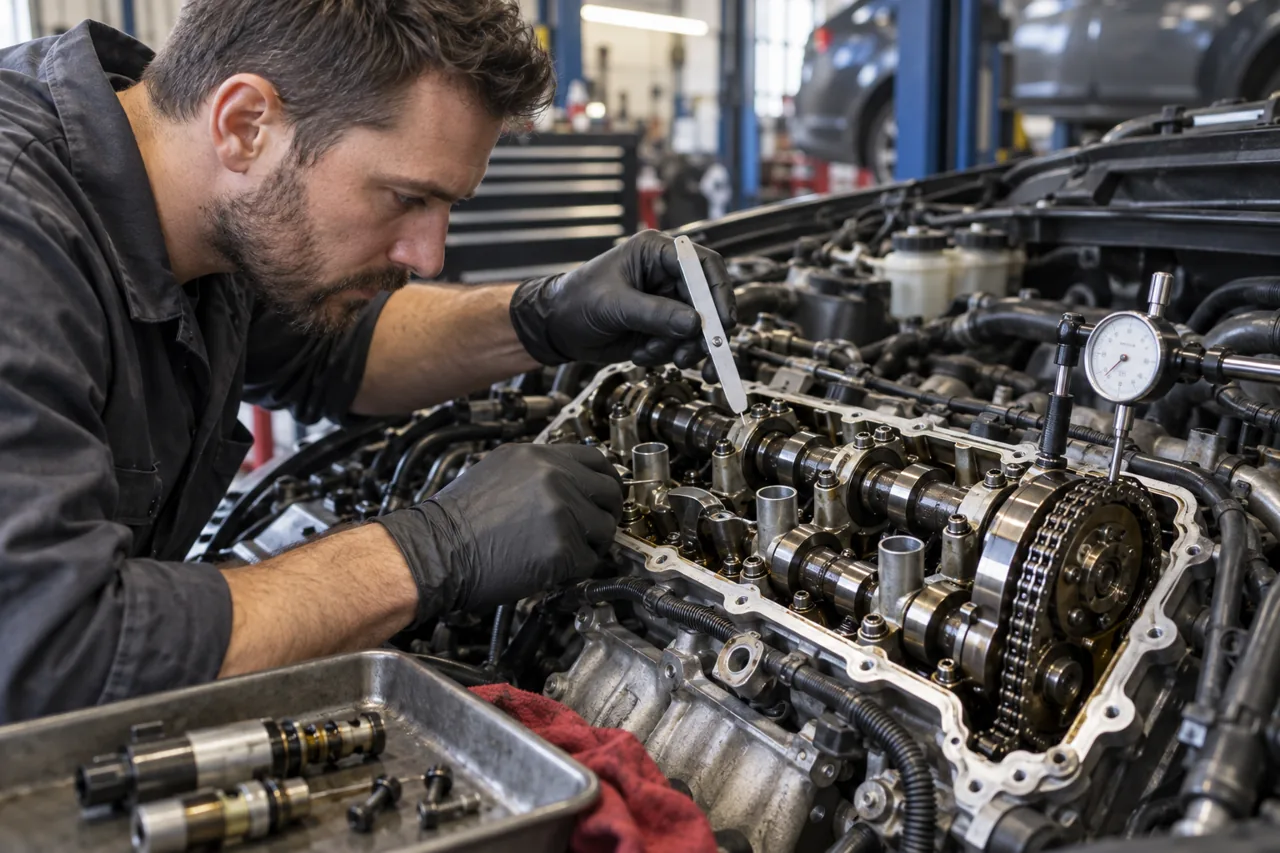
The short answer: a camshaft code is a system diagnosis
A camshaft-related code or symptom can justify sensor, circuit, oil-control, actuator, timing-drive, valve-train, or base-engine testing before the camshaft itself is condemned. Replacement becomes defensible only when measurement or inspection identifies camshaft damage or wear and the timing, lubrication, contamination, and related-component causes are included in the plan.
A “near me” or installation query does not make the procedure universal. Engine identity, interference risk, locking tools, bearing-cap sequence, fasteners, oil supply, timing method, and post-repair adaptations can change the consequences substantially.
Separate the camshaft from the camshaft system
The camshaft opens and closes valves through the engine’s valve train. Its relationship to crankshaft position depends on the timing drive, while many modern engines also vary cam timing or valve lift using oil pressure, actuators, control valves, sensors, and software. A fault anywhere in that chain can be described with “camshaft” terminology.
Replacement is a major conclusion because access can be extensive and incorrect timing can damage the engine. Begin with the exact engine, symptom, complete code set, oil level and condition, repair history, and service information. A generic video cannot supply the correct locking, measurement, or torque procedure.
Use the symptom and sound pattern carefully
Possible clues include abnormal upper-engine noise, rough running, misfire, reduced power, hard starting, oil-pressure concerns, or a cam/crank correlation warning. Noise that changes with engine speed, oil temperature, load, or recent oil service can help focus inspection, but recordings and location impressions do not identify the failed part by themselves.
Stop the engine for a sudden severe mechanical noise, oil-pressure warning, major misfire, metal debris, or evidence that timing has shifted. Continued operation can allow valve-to-piston contact or spread contamination. A quiet engine can still have a timing or control fault, so absence of noise does not clear the system.
Interpret position and correlation codes as relationships
A camshaft-position circuit code may involve a sensor, connector, wiring, power, ground, signal pattern, trigger wheel, or module input. A correlation or timing-performance code compares expected crankshaft and camshaft relationships and may involve the timing drive, actuator, oil control, learned values, mechanical installation, or signal quality.
Record freeze-frame data and all related engine codes before clearing them. Testing may compare commanded and actual angle, inspect signal waveforms, verify circuit integrity, or establish base mechanical timing with the correct tools. Replacing a position sensor because “camshaft” appears in the description can leave a mechanical timing fault untouched.
Oil supply is part of variable-timing diagnosis
Variable cam timing often depends on clean oil of the correct specification, suitable pressure, unrestricted passages, control solenoids, and mechanically sound actuators. Low level, wrong viscosity or specification, sludge, a damaged filter, restricted screen, pressure loss, or debris can affect response before the camshaft lobe itself is implicated.
An oil change is not a guaranteed repair for a timing code, and thick additives can create other problems. Inspect and measure according to the engine procedure. If metallic debris or component wear is present, identify the source and contamination scope before installing expensive timing or camshaft parts into a system that may damage them again.
Confirm base timing and mechanical condition
Mechanical checks can include timing alignment, chain or belt condition, tensioner operation, guide condition, end play, lobe and follower inspection, valve lift, compression, leak-down, and oil-pressure measurement. Which checks are appropriate depends on the engine design and evidence already found.
A stretched chain, failed tensioner, slipped timing component, worn follower, damaged rocker, actuator fault, or low oil pressure can produce a camshaft-related symptom without requiring the same repair. The recommendation should name the failed relationship and show why the chosen scope addresses both the damage and its cause.
Worked scenario: correlation code after recent timing work
Consider an engine that develops a cam/crank correlation code and reduced power after timing-system service. Replacing the camshaft-position sensor because it is named in a related description would ignore the change in repair history. The first checks should preserve scan data, compare commanded and actual position, verify base timing with the required tools, review actuator and oil-control operation, and inspect the signal only after the mechanical relationship is known.
If base timing is incorrect, correcting the installation and checking for internal contact addresses the stronger evidence. If timing is correct but the signal drops out under harness movement, the circuit becomes more likely. The editorial judgment is to weight the event sequence and measured relationship more heavily than a frequently replaced part.
Define the full replacement scope before disassembly
Camshaft work may require valve-cover and timing access, locking tools, timing components, bearings or caps that must remain in order, followers or adjusters, seals, gaskets, one-time-use bolts, fluids, cleaning, and measurement. Some engines impose strict bearing-cap sequences or do not service individual surfaces separately.
The estimate should state whether the camshaft alone, a valve-train set, an actuator, or a timing-drive group is included, and why. It should also address debris control, related wear, machine work if applicable, and the risk of discovering cylinder-head or piston damage. Compare estimates only after these assumptions are aligned.
Timing work has high consequence and exact-tool requirements
A crankshaft or camshaft that moves out of the specified position during service can create incorrect valve timing and, on interference engines, internal contact. Paint marks are not a universal substitute for manufacturer locking and measurement procedures. Torque-to-yield fasteners and sealing surfaces may also require replacement or controlled preparation.
This is not a beginner procedure simply because a short video shows accessible parts. Safe work requires the exact instructions, calibrated torque and angle tools, timing and holding equipment, clean assembly practice, and a plan for rotating and checking the engine before startup. When those requirements are unavailable, professional repair is the safer path.
Verify mechanically before and electronically after startup
Before startup, verify timing alignment, fastener completion, connector and hose routing, oil and coolant levels, and free rotation where the procedure specifies it. Establish oil pressure or prime components if required. On initial operation, watch for pressure warnings, abnormal noise, leakage, and immediate faults rather than raising engine speed to see whether the noise disappears.
After warm-up, compare commanded and actual cam timing, check misfire and correlation information, complete required adaptations, and repeat the original operating condition. Reinspect fluids and leaks after a heat cycle. A successful repair demonstrates stable mechanical timing, plausible control response, and resolution of the original symptom without new valve-train noise.