
2026 U.S. repair cost detail
Front brake pads and rotors: price, process, and questions
A complete front-brake estimate should identify pads, rotors, wear sensors, one-time hardware, labor, inspection findings, and verification. Performance packages and large two-piece rotors can move well beyond ordinary ranges.
Choose the next step
Check the assumptions behind this estimate
Compare other repairs, confirm the evidence, account for the vehicle, and prepare the right questions before authorization.
Cost anatomy
What the price can be made of
A useful estimate separates the major scope instead of presenting one unexplained total. Not every line below applies to every vehicle.
Pads and rotors
Part size, construction, brand, coating, and performance specification drive the largest material differences.
Wear sensors and hardware
Electronic sensors, clips, bolts, and retaining hardware may be required or condition-dependent.
Installation labor
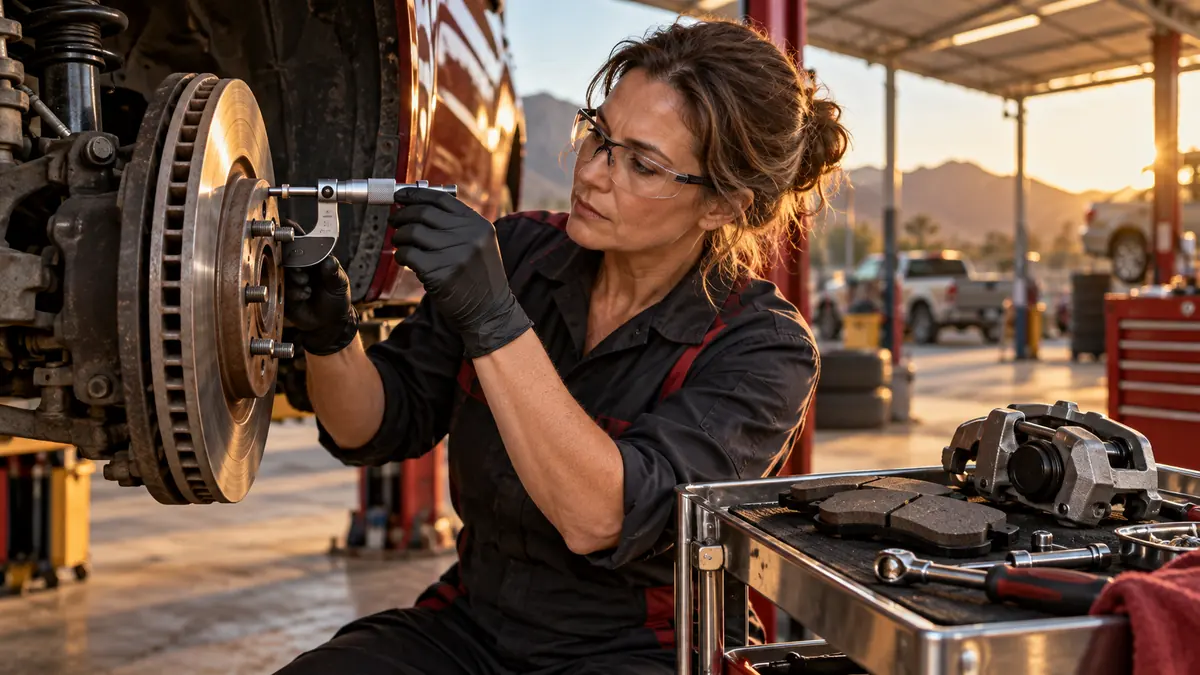
Cleaning hubs, servicing contact points, measuring condition, and correct torque are part of a durable job.
Verification
Pedal, leaks, warning reset, bedding guidance, noise, and road behavior should be checked.
Repair method
A defensible service process
The exact factory procedure changes by VIN and equipment, but the estimate should still make these decision stages visible.
- 01
Confirm the complaint and inspect pad thickness, rotor condition, calipers, hoses, fluid leakage, and related suspension/tire concerns.
- 02
Identify the exact brake package by VIN and equipment rather than model name alone.
- 03
Replace authorized parts, prepare hub and contact surfaces, service the caliper as appropriate, and torque fasteners/wheels correctly.
- 04
Restore pedal position, set fluid level, reset the wear indicator when applicable, road test safely, and provide bedding guidance.
Price variables
What can move the total
- Performance, ceramic-composite, or two-piece rotors
- Seized caliper slides, damaged boots, or corroded hardware
- Electronic wear sensors or one-time bolts
- Wheel size, rust, hub runout, or vibration diagnosis
Common questions
Questions drivers ask before authorization
Do rotors always need replacement?
Not automatically. Thickness, condition, runout, surface, manufacturer limits, and the chosen repair approach matter.
Why replace a wear sensor?
Some sensors wear through when triggered and cannot be reused; others may remain serviceable.
Are all brake packages the same on one model?
No. Wheel, trim, performance option, engine, and production changes can alter the brake package.
Will new brakes eliminate vibration?
Only if the vibration source is correctly identified; hubs, wheels, tires, suspension, and installation can also contribute.
What warranty should I compare?
Compare parts and labor coverage, exclusions, bedding requirements, and how noise or vibration complaints are evaluated.
Estimate checklist
Ask the shop to identify
- The exact vehicle, system, concern, and evidence supporting the work.
- Diagnostic labor, repair labor, parts, fluids, hardware, programming, calibration, disposal, tax, and excluded work.
- Which assumptions could require additional authorization after inspection or disassembly.
- The parts category and written parts-and-labor warranty.
- How the original symptom or maintenance result will be verified.
Method, limitations, and sources
The range is an editorial budgeting band for Greater Seattle and Puget Sound independent-shop planning in 2026. It reflects broad variation in imported and European vehicles and is deliberately wider than a single-shop advertised price. It is not a market average, offer, or substitute for a VIN-specific written estimate.
Continue by decision
Useful next steps for this topic
Choose the path that matches what you need to decide next. These links are selected from the same vehicle system, symptom, service, or regional context.
Follow the diagnostic evidence
Measure the friction system and find the cause of wear, noise, vibration, or drag before replacing parts
Pads, rotors, calipers, shoes, drums, hoses, hubs, bearings, tires, suspension, hydraulic pressure, parking-brake mechanisms, and electronic service modes interact. A noise, pulsa…Understand the service scope
Match brake fluid service to the exact specification, interval, system condition, and bleeding procedure
Brake fluid transfers pedal force through the hydraulic system while supporting lubrication and corrosion protection. Its condition matters, but a fluid exchange cannot repair a l…Follow the diagnostic evidence
Brake-fluid service cannot substitute for hydraulic-system diagnosis
Brake fluid transfers pedal force and supports lubrication, corrosion protection, electronic hydraulic control, and consistent operation across temperature. But an exchange cannot…Follow the diagnostic evidence