
2026 U.S. repair cost detail
Water-pump replacement: price, process, and questions
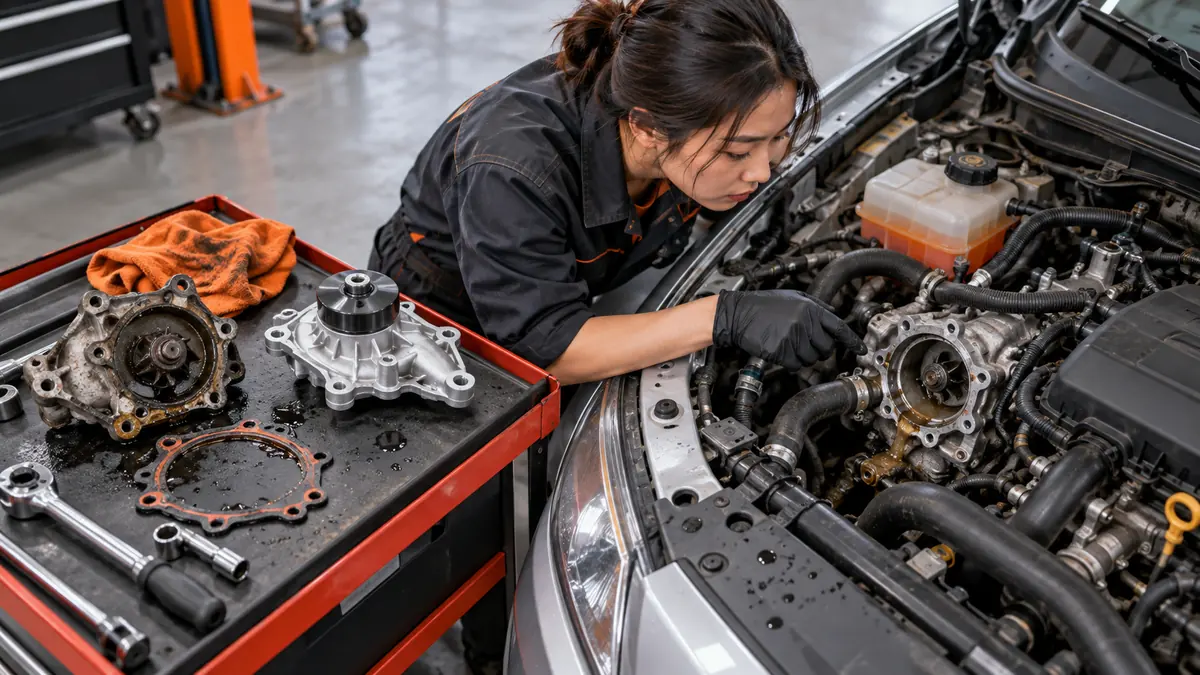
Water-pump replacement varies widely because the pump may be external, electrically driven, packaged beneath intake components, or integrated with a thermostat or housing. The estimate should connect replacement to confirmed leakage, bearing, flow, or control evidence.
Choose the next step
Check the assumptions behind this estimate
Compare other repairs, confirm the evidence, account for the vehicle, and prepare the right questions before authorization.
Cost anatomy
What the price can be made of
A useful estimate separates the major scope instead of presenting one unexplained total. Not every line below applies to every vehicle.
Pump and related assembly
Mechanical or electric pump, thermostat/housing, seals, bolts, and included sensors differ by application.
Access labor
Belts, covers, intake pieces, engine supports, or tightly packaged components can dominate labor.
Coolant and refill procedure
Correct coolant, vacuum fill or bleeding, and disposal are part of the scope.
Related-condition repair and verification
Hoses, connectors, pulley/belt condition, fault clearing, temperature cycles, and leak checks may be included.
Repair method
A defensible service process
The exact factory procedure changes by VIN and equipment, but the estimate should still make these decision stages visible.
- 01
Confirm the pump is the source through leakage, noise/play, flow, command, current, or temperature evidence appropriate to its design.
- 02
Identify the exact pump/thermostat configuration and access procedure; define related parts before authorization.
- 03
Drain safely, remove access components, replace the assembly and specified seals/hardware, and reassemble correctly.
- 04
Refill and bleed with the correct coolant, command electric bleed functions when required, temperature-cycle, inspect for leaks, and verify heater/fan behavior.
Price variables
What can move the total
- Electric versus belt-driven pump
- Pump integrated with thermostat or housing
- Intake, front-end, timing, or engine-support access
- Overheating damage or contaminated cooling system
Common questions
Questions drivers ask before authorization
Should the thermostat be replaced too?
Only when integrated, faulty, high-risk for shared labor, or justified by condition and service strategy.
Can a pump leak only when cold?
Yes. Seals and housings can change with temperature; residue and repeat inspection help.
Does overheating prove the pump failed?
No. Coolant loss, thermostat, airflow, combustion, blockage, sensor, and control faults can create similar symptoms.
Why is bleeding important?
Air pockets can reduce circulation or heater performance and create misleading temperature behavior.
What should the warranty cover?
Compare the pump/related parts and labor coverage, coolant, exclusions, and response to a repeat leak or warning.
Estimate checklist
Ask the shop to identify
- The exact vehicle, system, concern, and evidence supporting the work.
- Diagnostic labor, repair labor, parts, fluids, hardware, programming, calibration, disposal, tax, and excluded work.
- Which assumptions could require additional authorization after inspection or disassembly.
- The parts category and written parts-and-labor warranty.
- How the original symptom or maintenance result will be verified.
Method, limitations, and sources
The range is an editorial budgeting band for Greater Seattle and Puget Sound independent-shop planning in 2026. It reflects broad variation in imported and European vehicles and is deliberately wider than a single-shop advertised price. It is not a market average, offer, or substitute for a VIN-specific written estimate.
Continue by decision
Useful next steps for this topic
Choose the path that matches what you need to decide next. These links are selected from the same vehicle system, symptom, service, or regional context.
Understand the service scope
Pressure-test coolant loss without guessing at the wettest part
Coolant can travel along covers, shields, airflow paths, and subframes. A controlled test helps identify where fresh evidence begins and whether the system safely holds pressure.Follow the diagnostic evidence
Coolant, radiator, hose, and cap faults must be diagnosed as one operating system
An overheat, low-coolant warning, visible leak, collapsed hose, weak cabin heat, or stained radiator does not identify a failed part by itself. The cooling system depends on corre…Compare a related cost
Cooling-system pressure diagnosis: price, process, and questions
Pressure testing is one part of cooling-system diagnosis. A useful evaluation connects coolant level, leak evidence, cap/reservoir behavior, temperatures, airflow, circulation, co…Follow the diagnostic evidence