
Cooling-system guide
Water-pump symptoms need cooling-system diagnosis before replacement
A leaking or failing water pump can cause coolant loss, noise, unstable temperature, or overheating, but those symptoms are not unique to the pump. A sound repair decision confirms where coolant is escaping, whether circulation is adequate, and whether another fault caused or accompanied the failure.
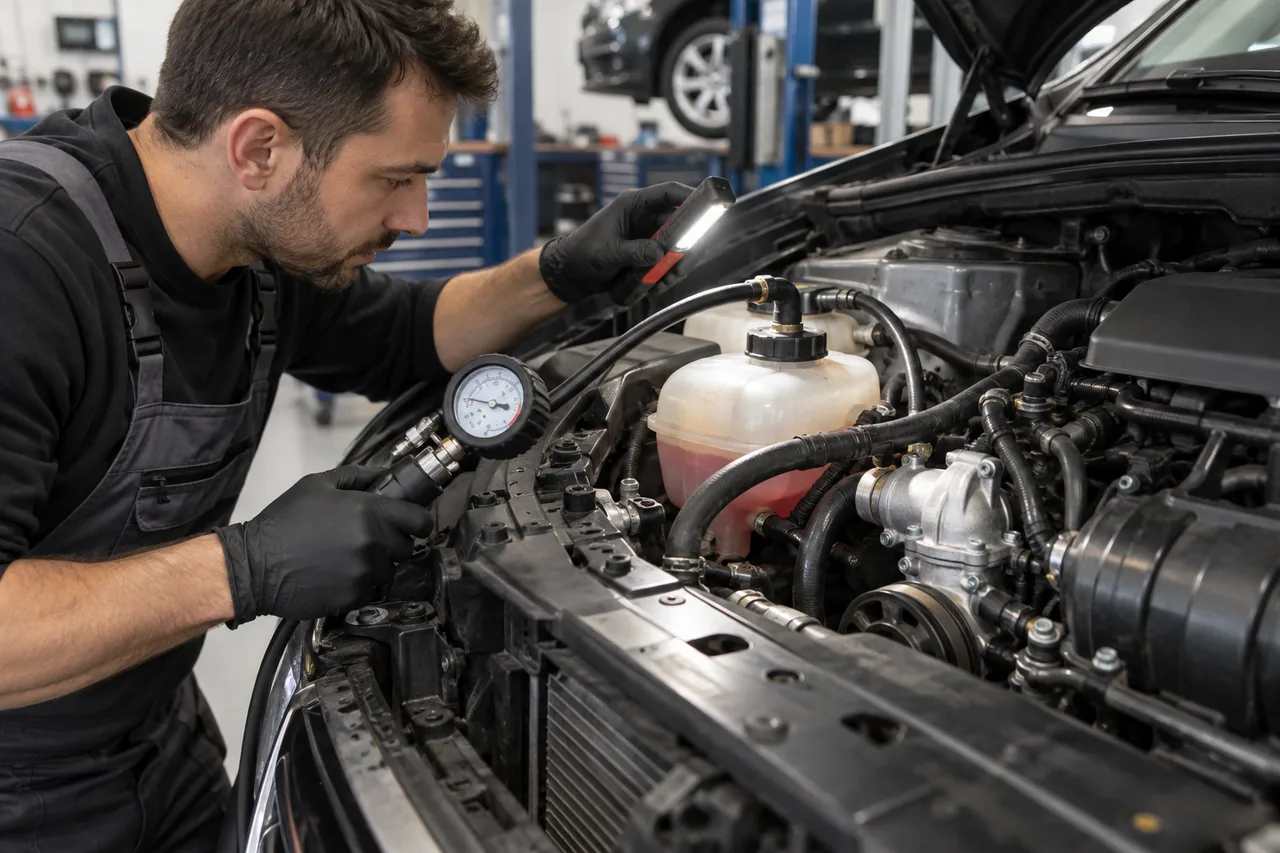
What the water pump does
The pump circulates coolant through passages in the engine and through the radiator and heater circuit. The exact drive arrangement varies: a pump may be driven by an accessory belt, timing belt, timing chain system, or an electric motor controlled by the vehicle.
Because designs differ, the correct test and replacement procedure depend on the exact year, model, engine, and installed components. A generic instruction cannot establish torque values, bleeding procedure, access steps, or whether related timing components must be serviced at the same time.
Symptoms that justify inspection
Visible coolant beneath the vehicle, dried coolant residue near the pump, bearing or grinding noise, pulley movement, a low-coolant warning, fluctuating cabin heat, or rising engine temperature can justify prompt inspection. A severe overheat, steam, or rapid coolant loss calls for stopping in a safe place instead of continuing to drive.
None of these signs proves that the pump is the source. Hoses, the radiator, reservoir, thermostat housing, heater circuit, pressure cap, fans, gaskets, and other seals can create similar symptoms. Coolant can also travel along covers or brackets before it becomes visible, making the apparent drip point misleading.
How a professional diagnosis separates the causes
A useful starting point is a cold visual inspection of the coolant level, condition, stains, hose connections, belt path, pulley alignment, and accessible weep or seal areas. A pressure test may reveal an external leak that is not obvious when the engine is cold and unpressurized.
Temperature data, heater behavior, fan command and operation, thermostat behavior, pressure changes, and model-specific circulation tests can help distinguish an airflow, control, restriction, combustion, or circulation problem. Noise should be localized rather than assumed to come from the nearest rotating component.
Questions to answer before authorizing replacement
Ask what evidence identifies the pump, whether the leak or bearing fault was directly observed, and whether the engine has been overheated. The estimate should explain required coolant, seals, bolts, belts, tensioners, timing components, or one-time-use hardware when those items genuinely apply to the vehicle.
It is also reasonable to ask how the cooling system will be filled and bled, whether a vacuum-fill tool or scan-controlled procedure is required, and how the shop will verify operating temperature, circulation, fan operation, cabin heat, and the absence of leaks afterward.
Related work is vehicle-specific
When a mechanical pump is driven by a timing belt, access labor and the consequence of reusing worn related parts may affect the repair plan. On another engine, the pump may be separately accessible and unrelated to timing service. Electric pumps introduce power, ground, communication, command, and control considerations in addition to mechanical or leakage faults.
“Replace everything nearby” is not a universal rule, but neither is replacing only the visible pump. The decision should consider the manufacturer procedure, component condition, maintenance history, duplicated labor, contamination, and the risk of leaving a known weak related part in place.
What verification should look like
After installation, the correct coolant mixture and filling procedure matter. Trapped air can produce poor heater performance, false level warnings, unstable temperature, or renewed overheating. The system should reach operating temperature under controlled observation, and any specified bleed or control procedure should be completed.
Verification normally includes a leak check, stable temperature, correct fan operation, expected heater output, and a final coolant-level check after the appropriate cool-down. Stored faults related to the event should be evaluated rather than simply erased without confirming whether they return.
When not to continue driving
Stop if the temperature warning is active, the gauge rises abnormally, steam appears, coolant is rapidly escaping, the belt system is failing, or the engine begins running poorly after an overheat. Continuing can turn a contained cooling-system repair into extensive engine damage.
Do not remove a pressure cap from a hot system. Hot coolant and steam can cause severe burns. If the safe next step is uncertain, arrange appropriate roadside assistance and have the vehicle inspected before it is driven again.
Use the guide to improve the repair conversation
The most useful outcome is not guessing the failed part from a symptom. It is knowing what evidence should separate the pump from related faults, what vehicle-specific information changes the procedure, and how the completed repair will be verified.
For a local commercial repair path, continue to the water-pump service page. That page remains separate from this educational guide so informational and appointment-oriented searches are not forced into the same content.