Guide library

Understand the system before choosing the repair — Page 3

These guides explain what a symptom may indicate, what testing can distinguish, and when professional help is the safer next step.

Guides are organized around repair decisions rather than quick part replacement. Each complete guide defines the system, separates symptoms from causes, explains useful tests, identifies safety limits, and describes how to verify the outcome. Sources and limitations are included where they materially affect the decision.

Use a guide to prepare questions and recognize a defensible process—not to bypass equipment, service information, or professional judgment. Vehicle configuration and previous work can change the correct procedure, and an active safety or overheating condition should be inspected directly rather than diagnosed from a page.

The initial library restores water-pump, EGR, coolant-temperature-sensor, camshaft, and mass-airflow topics that had historical visibility. Brakes, electrical systems, fluids, and other recovered subjects will be added one complete guide at a time rather than exposed as thin placeholders. Each release must remain independently useful.

Choose the next step

Turn the guide into a repair plan

Use the route that matches the decision you need to make next: diagnosis, vehicle fit, budget, or where to go.

Timing-drive technical guide

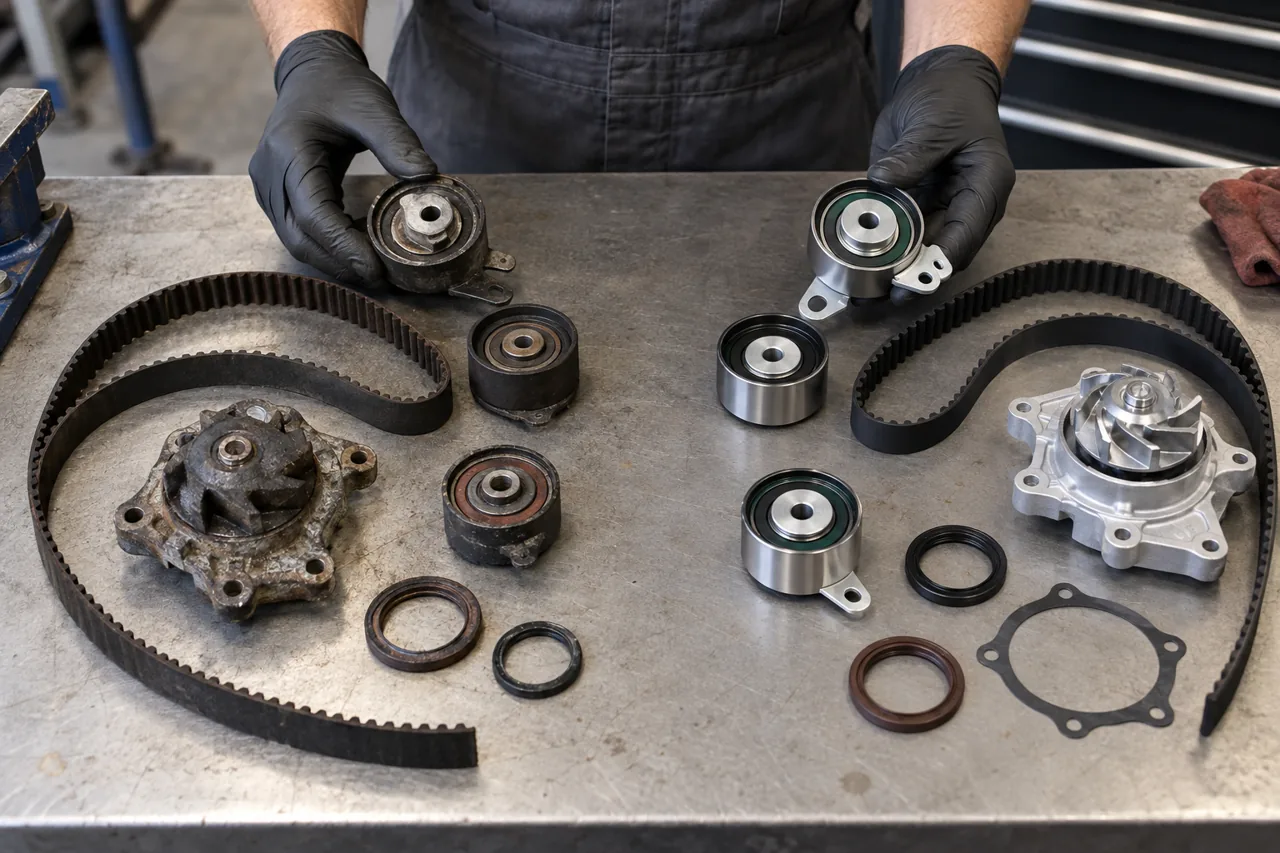
A timing belt, tensioner, idlers, sprockets, seals, and related pump operate as one synchronized drive

A timing belt keeps crankshaft and camshaft motion synchronized on engines designed to use one. Its service decision is not based on belt appearance alone, and a tensioner is not an unrelated pulley. Exact engine identity, manufacturer time and mileage limits, documented history, drive layout, tensioning method, oil or coolant contamination, related rotating parts, required tools, engine damage risk, and post-installation verification define the complete job.

Read guide
Tire and wheel technical guide

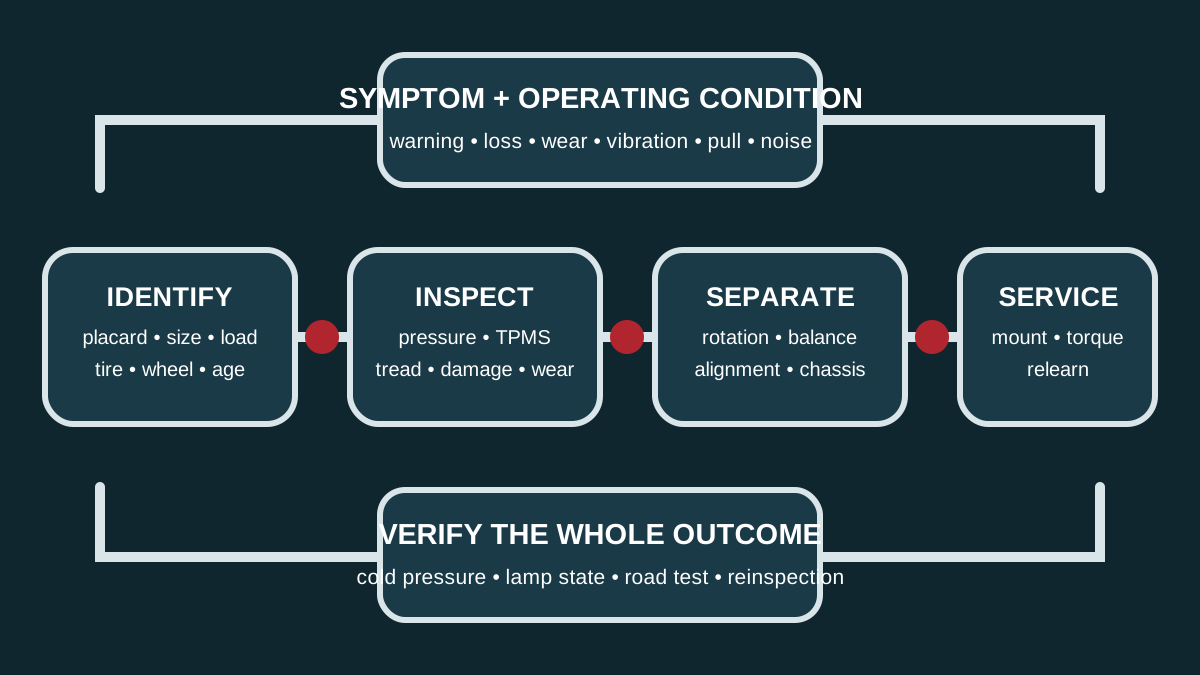
Tire replacement, rotation, balancing, and TPMS are connected—but they solve different problems

A pressure warning, uneven tread, vibration, pull, noisy tire, or damaged sensor does not justify the same service. Safe decisions begin with the exact tire and wheel application, cold inflation pressure, load, damage and wear evidence, vehicle layout, TPMS design, and the operating condition that produces the complaint. This guide separates those decisions and defines what should be verified after the work.

Read guide

Vacuum and brake-assist technical guide

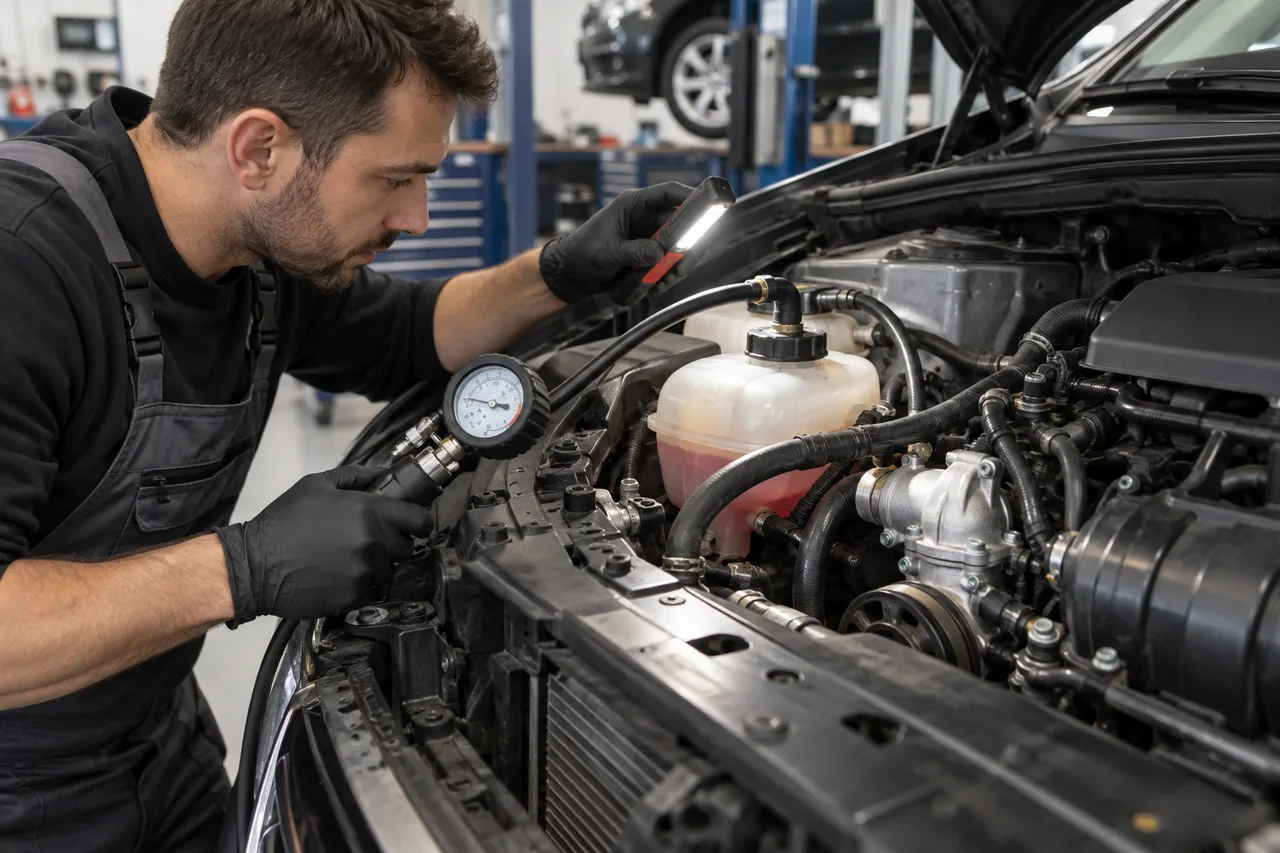
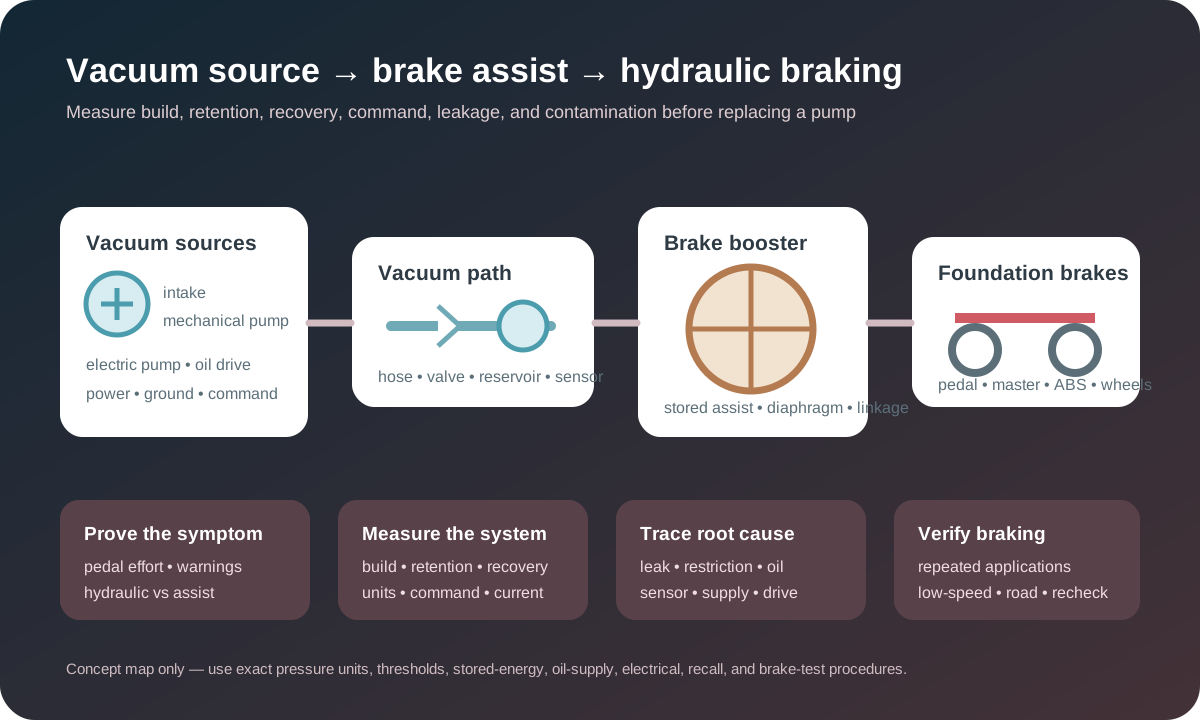
Vacuum-pump replacement starts with proving the complete brake-assist system

A hard pedal, brake-assist warning, long pump run, hissing, oil leak, vacuum code, or low measured vacuum does not automatically identify a failed pump. The system may depend on intake-manifold vacuum, a mechanically driven pump, an electric pump, a check valve, reservoir, pressure sensor, hoses, brake booster, electrical control, lubrication supply, or a combination. A safe diagnosis separates assist from foundation braking, measures vacuum build and retention under the correct conditions, locates leakage or contamination, and verifies repeated brake applications after repair.

Read guide

Glass and visibility technical guide

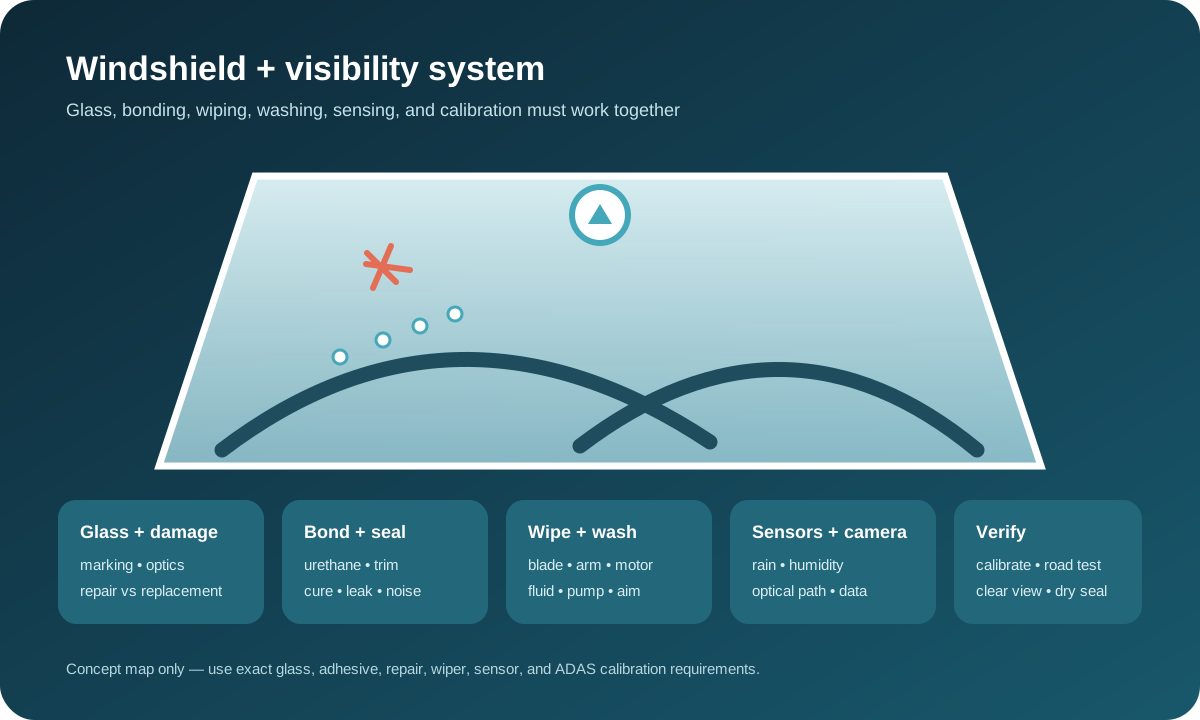
Windshield, wiper, washer, sensor, and camera work form one visibility system

A chip, crack, water leak, streak, chatter, slow wiper, empty spray pattern, rain-sensor complaint, or driver-assistance warning does not always belong to one part. Safe visibility depends on certified glazing, unobstructed optical zones, secure bonded installation, correctly fitted wipers, a functioning washer system, undamaged trim and drains, and cameras or sensors that remain mounted and calibrated as the vehicle requires. A complete repair decision documents the damage, identifies installed equipment, separates repair from replacement, and verifies visibility in wet and dry conditions.

Read guide