
Cooling system
Confirm the source of a cooling-system problem before replacing the pump
Coolant loss and overheating can come from several components. Inspection and pressure, circulation, temperature, and drive-system checks help isolate the actual fault.
Treat overheating as a condition, not a component name
A rising temperature gauge, warning message, coolant odor, visible steam, or loss of cabin heat can indicate that the cooling system is no longer controlling engine temperature. The water pump is one possible cause, but coolant loss, trapped air, thermostat faults, fan problems, radiator restriction, combustion leakage, and sensor or control issues can create similar symptoms.
If the temperature is above normal, steam is present, or coolant is escaping rapidly, stop safely and shut the engine down. Do not open a pressurized reservoir or radiator cap while the system is hot. Driving an overheating engine can cause damage that is far more extensive than the original cooling-system fault.
Evidence that can point toward the pump
Coolant residue at the pump vent or housing, bearing roughness, pulley wobble, shaft play, or noise that follows pump speed can support a pump diagnosis. On vehicles with electronically controlled pumps, command, current draw, speed feedback, communication faults, and temperature behavior may be more useful than external leakage.
Location matters because coolant can travel along covers, brackets, or the engine before dripping. A leak above the pump can make the pump appear wet, while a pump hidden behind a timing cover may leak without an obvious external trail. Cleaning and pressure testing can help establish where fresh coolant first appears.
Check the whole circulation path
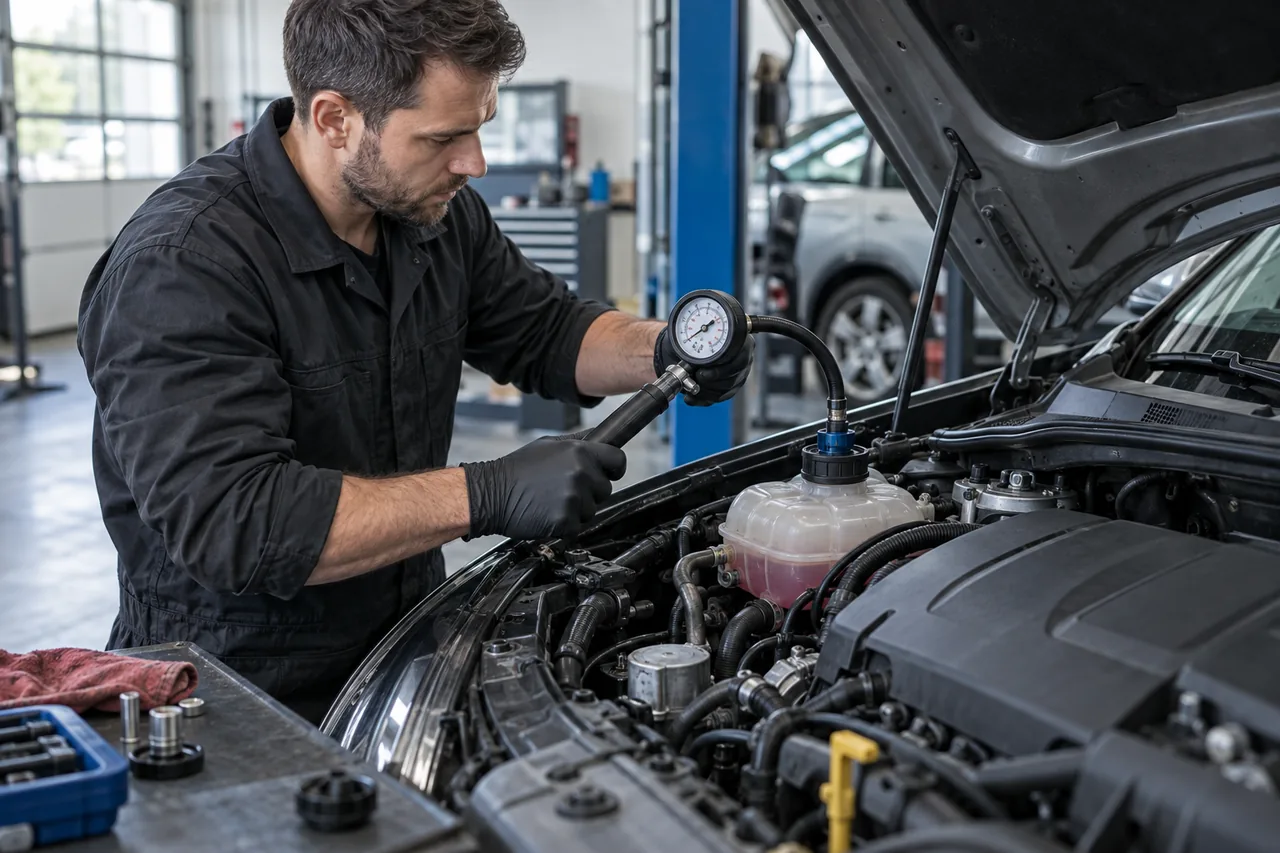
A pressure test evaluates whether the sealed system holds pressure and can reveal external leakage, but it does not by itself prove that coolant is circulating. Temperature measurements, hose behavior, heater output, thermostat response, fan command, scan data, and manufacturer procedures help evaluate heat transfer and flow.
The drive method also affects the repair plan. A belt-driven pump may share access with a timing belt or accessory drive, while an electric pump introduces power, ground, command, and control considerations. Related work should be recommended because the procedure or condition justifies it—not because every nearby component must automatically be replaced.
Define the repair scope before authorization
The estimate should identify the pump assembly, seals, required coolant, one-time-use fasteners, belts or covers disturbed by the procedure, and any related component that inspection shows to be damaged. It should also explain whether the cooling system needs flushing because of contamination or incompatible coolant rather than treating a flush as an automatic add-on.
Ask whether the chosen part matches the vehicle application and what warranty applies to both the part and labor. If overheating occurred, discuss whether evidence justifies additional testing for combustion leakage or engine damage. A pump replacement cannot correct damage already caused by severe overheating.
Correct filling and bleeding are part of the repair
Air trapped after cooling-system work can reduce circulation, interrupt cabin heat, create temperature spikes, and produce misleading level changes. The correct fill and bleed method varies by vehicle and may involve vacuum filling, bleed points, heater settings, scan-tool activation of an electric pump, or a defined warm-up sequence.
Coolant type and mixture must match the application and existing system condition. Color alone is not a reliable specification. Mixing incompatible products or using an incorrect concentration can affect corrosion protection, freeze and boil protection, seal life, and heat transfer. The repair record should identify what was installed.
Verification matters after the first heat cycle
After repair, inspect for leakage under pressure, bring the engine through the appropriate operating range, confirm stable temperature and fan response, and verify cabin heat and coolant circulation where the procedure allows. Recheck the belt path and any areas disturbed during access. The original warning or symptom should be deliberately reassessed.
Some systems settle after cooling completely, so the final level may need a cold recheck according to the manufacturer procedure. Return promptly if temperature becomes unstable, the level drops again, heat disappears, or fresh residue appears. For a deeper explanation of failure modes and repair planning, continue to the complete water-pump guide.