
2026 U.S. repair cost detail
Transmission fluid service: price, process, and questions
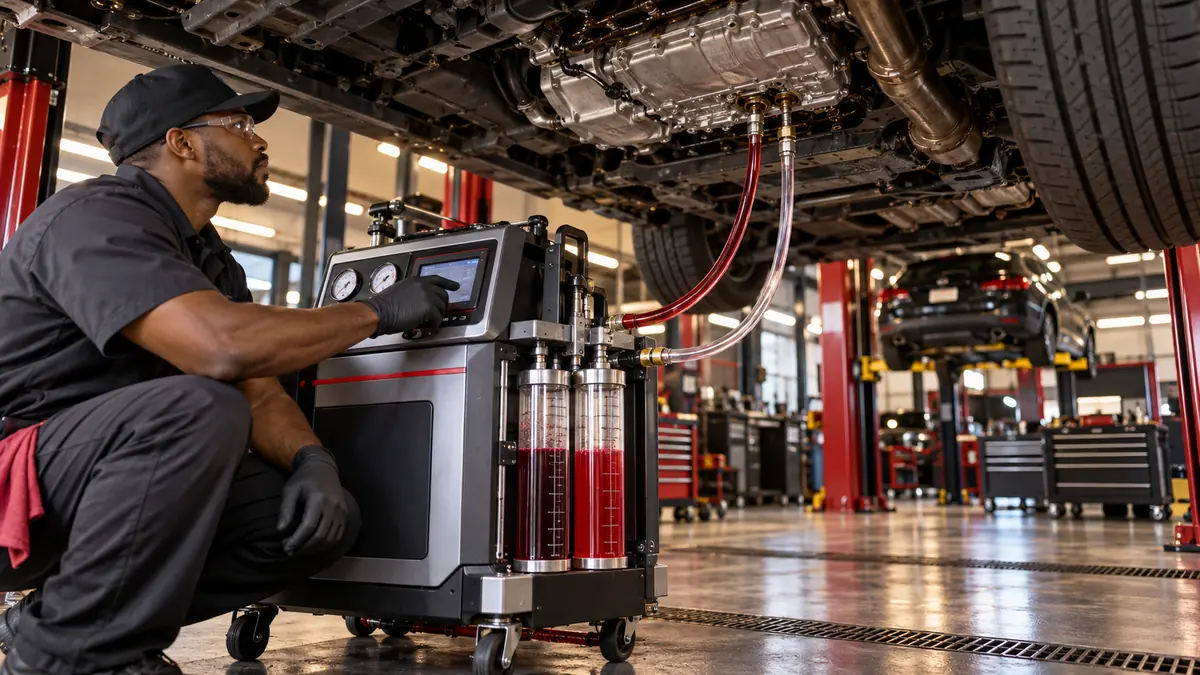
Transmission-fluid service cost depends on transmission identity, fluid approval and quantity, pan/filter design, fill-temperature procedure, access, and whether existing shift symptoms require diagnosis rather than maintenance.
Choose the next step
Check the assumptions behind this estimate
Compare other repairs, confirm the evidence, account for the vehicle, and prepare the right questions before authorization.
Cost anatomy
What the price can be made of
A useful estimate separates the major scope instead of presenting one unexplained total. Not every line below applies to every vehicle.
Approved fluid
Automatic, dual-clutch, CVT, and manual units use different fluids and quantities.
Pan, filter, seals, and hardware
Some filters are integrated into the pan; bolts, plugs, seals, or magnets may be serviced.
Drain/fill labor
Level setting may require scan data, a temperature window, engine running, and a defined shift sequence.
Adaptation or diagnostic work
Resetting values is not universally required and should not replace diagnosis of an existing fault.
Repair method
A defensible service process
The exact factory procedure changes by VIN and equipment, but the estimate should still make these decision stages visible.
- 01
Identify the exact transmission by VIN/build data and clarify whether the goal is maintenance or symptom diagnosis.
- 02
Check for leakage, stored faults, fluid condition where accessible, and service history before choosing scope.
- 03
Drain or service the pan/filter as authorized, use the exact approved fluid, and follow the specified fill/level procedure.
- 04
Inspect for leaks and verify engagement and shift behavior; perform adaptations only when technically supported.
Price variables
What can move the total
- Integrated pan/filter assembly
- High fluid quantity or specialty fluid
- Seized or damaged plugs and existing leaks
- Fault diagnosis, software, adaptation, or internal damage
Common questions
Questions drivers ask before authorization
Is a fluid exchange the same as a drain and fill?
No. Methods and quantities differ; ask exactly what fluid is removed and which parts are serviced.
Will service fix slipping or harsh shifts?
Not reliably. Existing faults may need diagnosis, software review, hydraulic testing, or internal repair.
Is “lifetime fluid” never serviced?
Terminology and service strategy vary by manufacturer, transmission, use, condition, and documentation. Verify the exact application.
Should adaptations always be reset?
No. A reset should follow a supported procedure and purpose, not be used to hide a fault.
What belongs on the invoice?
Transmission identification, fluid specification/quantity, pan/filter/seals, labor, level method, and diagnostic work.
Estimate checklist
Ask the shop to identify
- The exact vehicle, system, concern, and evidence supporting the work.
- Diagnostic labor, repair labor, parts, fluids, hardware, programming, calibration, disposal, tax, and excluded work.
- Which assumptions could require additional authorization after inspection or disassembly.
- The parts category and written parts-and-labor warranty.
- How the original symptom or maintenance result will be verified.
Method, limitations, and sources
The range is an editorial budgeting band for Greater Seattle and Puget Sound independent-shop planning in 2026. It reflects broad variation in imported and European vehicles and is deliberately wider than a single-shop advertised price. It is not a market average, offer, or substitute for a VIN-specific written estimate.
Continue by decision
Useful next steps for this topic
Choose the path that matches what you need to decide next. These links are selected from the same vehicle system, symptom, service, or regional context.
Understand the service scope
A digital inspection should make the evidence easier to review—not just add photos
A useful report identifies the vehicle and concern, records where each finding was observed, adds measurements or limits when they matter, explains consequence and urgency, and ke…Follow the diagnostic evidence
Power-steering fluid and pump decisions begin by identifying the system
Heavy steering, intermittent assist, a warning message, fluid loss, whining, foaming, or poor return-to-center does not automatically identify a bad pump or a need for a flush. Th…Plan the regional trip
Choose the Tukwila route around the vehicle’s safest condition
Tukwila driving can shift quickly from surface streets to I-5, I-405, and SR 518. A marginal cooling, tire, or charging problem deserves a route decision before congestion adds he…Apply it to a vehicle