
South King County driver guide
European auto repair planning for Des Moines, Washington drivers
For a vehicle starting in Des Moines, the useful decision is whether it should move, what evidence must be preserved, and how the chosen repair scope will be authorized and checked. A nearby destination does not make an active cooling, tire, brake, or drivability problem safe.
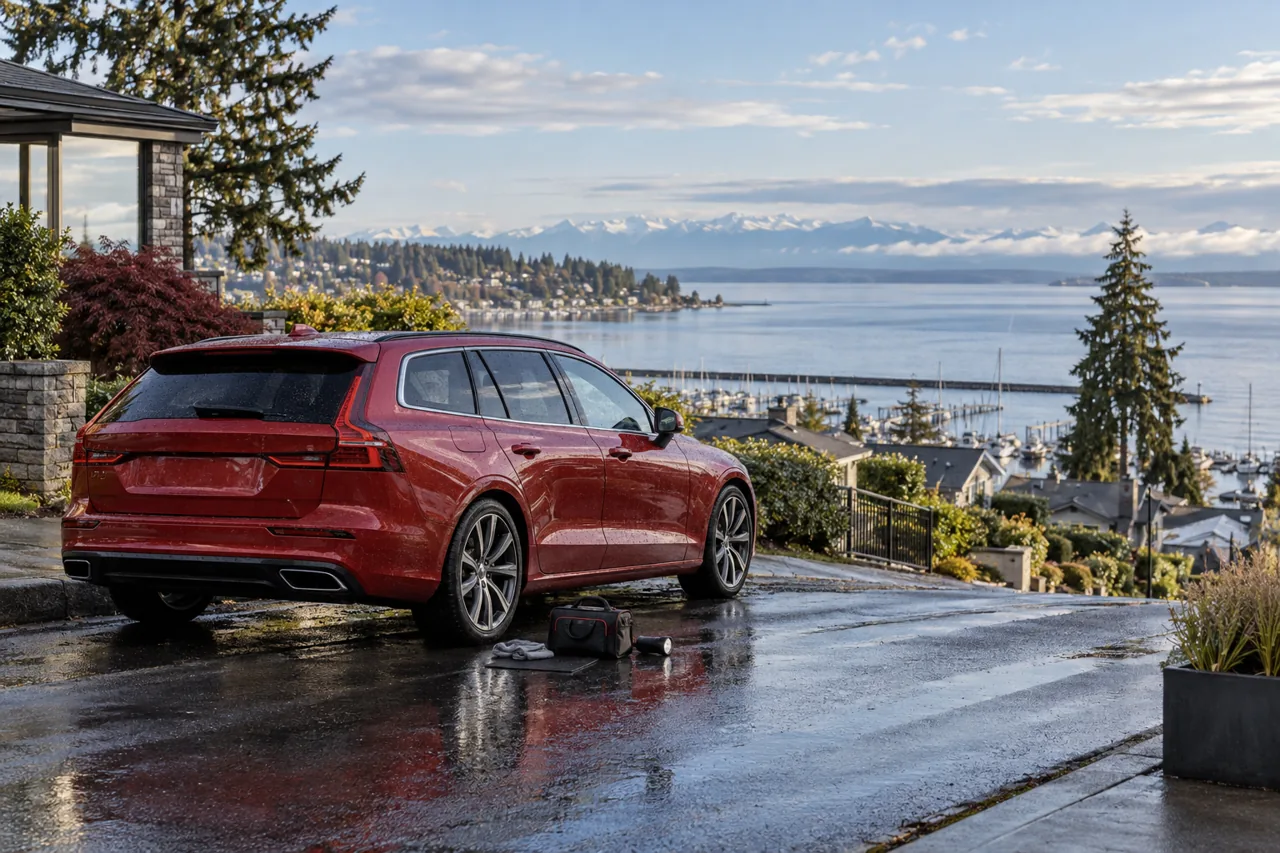
The immediate answer for a Des Moines driver
Record whether the concern began on a short local trip, after a climb, during rain, or after the vehicle sat near the waterfront. Then separate a stable condition that can be scheduled from overheating, braking, steering, fuel, tire, or severe drivability symptoms that call for stopping and recovery.
This page restores a historically ranked Auto Sport Imports URL as a driver-planning resource. It does not claim a current pickup radius, mobile service, appointment slot, towing arrangement, or guaranteed travel time. Confirm the provider, location, hours, vehicle capability, and transportation plan directly before moving a disabled or unsafe vehicle.
Des Moines trip context can change how a symptom appears
Des Moines Public Works describes responsibility for a safe and functional transportation system, while the city’s documents include transportation planning for its street network. For vehicle diagnosis, the relevant observation is not the city label but the operating transition: a cold start followed by a hill, lower-speed local travel followed by highway load, wet weather, or a hot soak after parking.
Tell the provider whether a vibration follows road speed, engine speed, braking, steering input, or a particular surface. Note whether weak cabin heat accompanies a temperature change, whether an electrical warning follows water exposure, and whether a noise appears only on a grade. These details narrow a test plan without claiming that a local road caused the fault.
Describe the condition before arranging the trip
Record the exact warning or symptom, when it began, whether the engine was cold or hot, road speed, recent repair or battery work, weather, fuel level, and anything that changes the condition. Photograph dashboard messages before restarting. Do not clear codes or disconnect the battery merely to turn a light off; that can remove freeze-frame and readiness evidence needed to reproduce an intermittent fault.
Give the repair provider the model year, exact engine or powertrain when known, mileage, service history, recent invoices, and the location where the vehicle can be inspected. Ask whether the first authorization covers inspection, a defined diagnostic block, or a specific repair. A useful plan separates evidence-gathering from permission to replace parts.
Decide whether the vehicle should be driven
Stop safely for overheating, steam, rapid fluid loss, a strong fuel smell, smoke, severe shaking, a flashing engine warning with poor running, a sudden loss of braking or steering assistance, a damaged tire, or a noise that is rapidly worsening. A web page cannot inspect the vehicle or override the owner manual. When the safe choice is unclear, roadside recovery is more defensible than testing the symptom during a longer trip.
For a stable warning with normal operation, preserve the evidence and ask the chosen provider what conditions would change the plan. A short local drive is not automatically safe, and a longer highway trip is not automatically harmful; urgency depends on the observed condition, companion warnings, temperature, fluid loss, noise, and vehicle-specific instructions.
Worked scenario: coolant odor after a short waterfront trip
An Audi driver notices a sweet odor and a slowly falling cold coolant level after several short trips, but the temperature display remains normal. Instead of topping off repeatedly and driving farther, the driver records the cold level, photographs fresh residue, and avoids opening the system hot.
A bounded inspection checks pressure retention, cap and reservoir condition, hose connections, water-pump and thermostat areas, shields where coolant can travel, and actual temperature behavior. The editorial judgment is that a documented slow loss deserves source confirmation before either a long trip or a pump replacement.
Compare repair proposals on evidence and scope
Washington consumer guidance emphasizes written estimates, authorization, parts and labor descriptions, and a final invoice. Ask what observation or test supports the recommendation, what is included, which assumptions could change the price, whether related fluids or one-time-use hardware apply, and how the original concern will be verified. A low initial number and a complete diagnostic scope are not necessarily comparable proposals.
Part descriptions matter. The final record should distinguish new, remanufactured, rebuilt, used, original-equipment, original-equipment-supplier, or aftermarket parts as applicable and state the warranty actually offered. Do not assume a familiar brand name, a named code, or the word “OEM” establishes correct fitment, current availability, or responsibility for labor.
Plan the return trip and follow-up before authorizing work
Ask whether verification requires a cold start, warm restart, heat cycle, monitored road test, readiness monitor, alignment check, charging load, leak recheck, or later level inspection. If the original symptom was intermittent, define what can be confirmed immediately and what evidence should be captured if it returns. Clearing a warning or producing a quiet idle is not enough when the failure occurred only under load, in rain, after a long soak, or at operating temperature.
Keep the estimate, authorization changes, invoice, measurements, parts description, and warranty terms together. Before leaving, confirm that no warning, leak, abnormal temperature, braking concern, or loose component makes the return unsafe. The editorial judgment is to choose a bounded, documented plan over a location claim or parts promise that has not been verified.