
Driver-area update · September 2026
Renton hills make load and temperature evidence especially useful
A symptom that appears climbing from the lake or joining I-405 may disappear at the shop. Record the operating condition so diagnosis can reproduce the load without guessing.
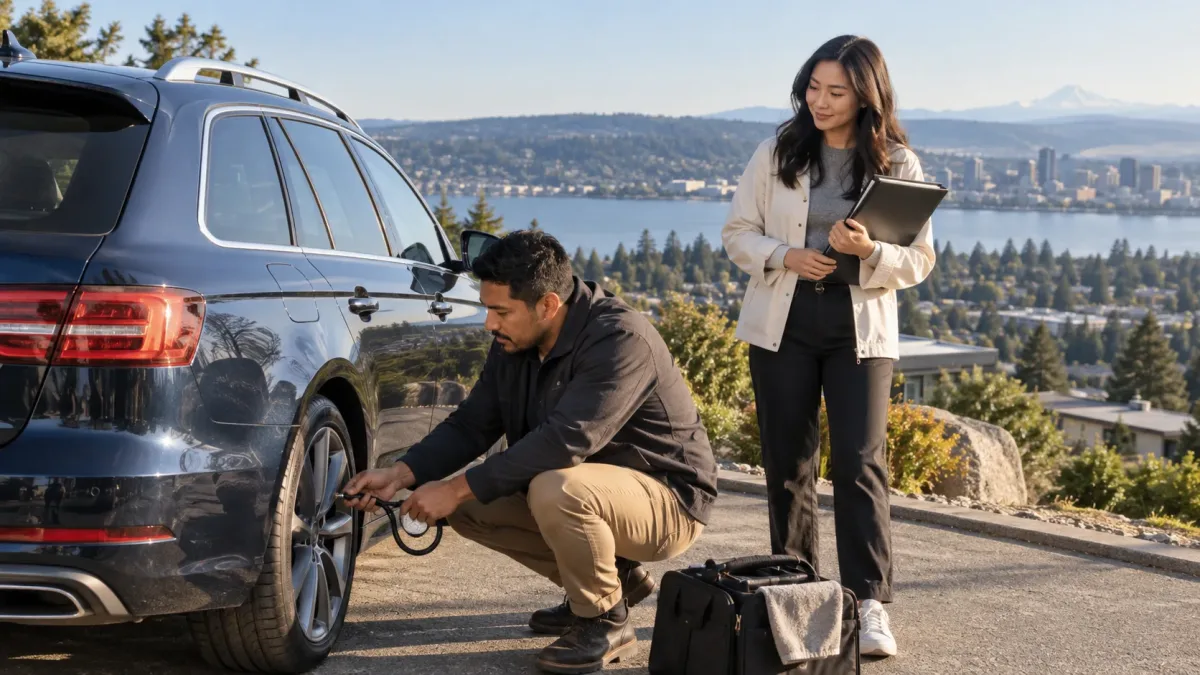
Record the symptom before departure
Photograph warning messages and write down whether the engine was cold or hot, the road, speed, grade, traffic, rain, fuel level, and how long the vehicle had been running. Note recent repairs, jump starts, fluid additions, tire work, or battery disconnection. For Renton driving, grade changes can expose cooling, boost, transmission, braking, and weak electrical connections. That pattern is valuable evidence, not a diagnosis.
Make a go, pause, or recover decision
Do not drive through overheating, smoke, strong fuel odor, a flashing engine warning with severe shaking, red oil-pressure warning, loss of braking or steering, a visibly damaged tire, rapid fluid loss, or a worsening mechanical noise. Move to a safe location if possible and arrange qualified recovery. For a stable minor concern, choose daylight, lighter traffic, and a route that avoids unnecessary load.
Bring evidence that saves diagnostic time
Bring the VIN, mileage, service records, a concise timeline, photographs, previous estimates, and the exact fluid or part added recently. Do not clear codes or disconnect the battery merely to extinguish a warning. Tell the service provider if the symptom appears only after a hill, a soak, a long idle, rain, or highway speed so the inspection can be planned around the actual condition.
Define authorization before leaving the vehicle
Agree on the initial inspection or diagnostic scope, contact method, spending limit, and what requires further authorization. Ask for findings that separate safety work, damage prevention, due maintenance, and monitor-only items. A remote estimate based on a warning name cannot account for wiring, leakage, mechanical condition, software, access, or previous repair quality.
Plan the return trip as part of verification
Before returning toward Renton, review what failed, what was repaired, what was tested, and what still needs a drive cycle or cold recheck. Confirm that warning status, fluid level, tire pressure, temperature, braking, and the original symptom were evaluated. If the repair cannot yet be fully verified, obtain a specific follow-up condition rather than assuming the longer drive home will prove it safely.
Account for weather, traffic, and appointment timing
South King County rain, cool starts, airport congestion, summer heat, and rapid changes between surface streets and highways can alter a symptom. Choose an appointment time that helps preserve the condition when practical: an early cold arrival for start-up noise, a warmed trip for a heat-related fault, or a dry daylight inspection for a leak or tire concern. Do not deliberately recreate an unsafe condition merely to make it easier to observe.
Check current travel conditions before departure and keep the provider’s contact information and a recovery option available. Bring medications, child-seat needs, work equipment, accessibility requirements, and alternate transportation into the plan rather than assuming every diagnosis will be completed while you wait. Parts availability, cooling time, intermittent testing, outside calibration, or expanded authorization can turn a short visit into a longer stay.
Use local context without turning it into a diagnosis
A hill, interchange, pothole, rainstorm, or long idle can reveal a weakness, but location alone does not identify a pump, sensor, module, tire, or control unit. Describe the road and condition, then let inspection and measurement distinguish heat, load, vibration, moisture, voltage, pressure, airflow, and mechanical causes. Avoid ordering a component based only on what another vehicle did on the same route.
Keep the final invoice and note the route or condition used for verification. On the first return trip, watch the original warning, temperature, braking, steering, vibration, odor, and fluid evidence without becoming distracted from driving. Pull over safely if a serious condition appears. If follow-up data or a cold recheck is required, schedule it explicitly so the regional trip ends with a documented plan rather than an assumption.